Bangkok Cost of Living 2026
A couple living comfortably in Bangkok on a 90-day stay spends around $2,231/month — modern Airbnb condo, eating out regularly, BTS/MRT transport, travel insurance, and a buffer for miscellaneous. Solo travelers can expect roughly $1,550/month. Budget a minimum of $2,000/month — $3,000+ if you want regional travel and no budget stress.
- Our Actual Monthly Costs in Bangkok
- Full 90-Day Budget
- Average Rent in Bangkok (2026)
- Best Areas to Stay in Bangkok
- Food and Dining Costs in Bangkok
- Transportation Costs in Bangkok
- Healthcare Cost in Bangkok
- Entertainment and Nightlife Costs
- Airbnb vs Hotels in Bangkok
- Visa Options for Bangkok
- Tax Residency Warning
- Bangkok vs Da Nang
- How Much Do You Need to Live in Bangkok?
- Pros and Cons
- Is Bangkok Worth It in 2026?
I’ve been using Bangkok as my primary base for four years. It’s where I return after every Vietnam rotation, and it still hasn’t gotten old. The city is loud, fast, world-class in ways most people don’t expect, and genuinely affordable once you stop living like a tourist. This guide is built on what we actually spend — not benchmark estimates or aggregated survey data. These are our real 2026 numbers as a couple doing a 90-day stay in the Sukhumvit area.
About This Guide
Four years based between Bangkok and Da Nang. Every number in this guide is what we actually paid during our most recent 90-day stay in 2026 — not projections, not aggregated averages. If a number is an estimate, we say so.
Our Actual Monthly Costs in Bangkok
Two people. Modern Sukhumvit area Airbnb condo. Cooking about half our meals at home, eating out the rest. BTS and Bolt for transport. Genki travel insurance. Here’s exactly what we spent.
Our Couple Total
$2,231
Per Month (2 People)
Solo Estimate
$1,550
Per Month (1 Person)
Full 90-Day Stay
$6,693
Total (Couple)
| Expense | Monthly (Couple) | Notes |
|---|---|---|
| 🏠 AccommodationModern Sukhumvit Airbnb | $1,100 | 1-month booking |
| ⚡ Electric + WaterUtilities | Included | Covered in Airbnb |
| 📱 Cell PhoneAIS — 2 lines | $26 | 1-year promo, unlimited data both lines |
| 🍜 RestaurantsEating out | $200 | Dinners out for two |
| 🛒 GroceriesSupermarkets + local shops | $300 | Cook ~half meals at home; food + beer + personal care |
| 🚇 TransportationBTS, MRT, Grab, Bolt | $70 | Mix of metro and ride-hailing |
| 🏥 Travel InsuranceGenki Explorer | $160 | Long-term expat policy for two |
| 🛂 VisaDTV | — | Paid upfront last year (~$80 total for 5 years) |
| 🛍️ ShoppingGear and essentials | $25 | Clothing and travel gear replacements |
| 🎉 EntertainmentActivities + occasional nights out | $50 | We keep this intentionally low |
| 📦 MiscellaneousBuffer | $300 | Unexpected expenses |
| Monthly Total | $2,231 | Comfortable living for two |
Our actual Bangkok cost of living per month — 2026, 2 people, Sukhumvit area Airbnb
Full 90-Day Budget
We think in 90-day visa cycles, not months. Here’s the full stay projection — what we actually plan for when we book a Bangkok rotation.
| Expense | 90 Days (Couple) | 90 Days (Solo Est.) |
|---|---|---|
| Accommodation | $3,300 | $3,300 |
| Cell Phone | $78 | $39 |
| Restaurants | $600 | $350 |
| Groceries | $900 | $500 |
| Transportation | $210 | $150 |
| Travel Insurance | $480 | $240 |
| Shopping | $75 | $40 |
| Entertainment | $150 | $100 |
| Miscellaneous | $900 | $450 |
| 90-Day Total | $6,693 | $5,169 |
Full 90-day Bangkok budget — 2026. Visa not included (DTV paid upfront, amortizes to ~$1.33/month over 5 years).
Average Rent in Bangkok (2026)
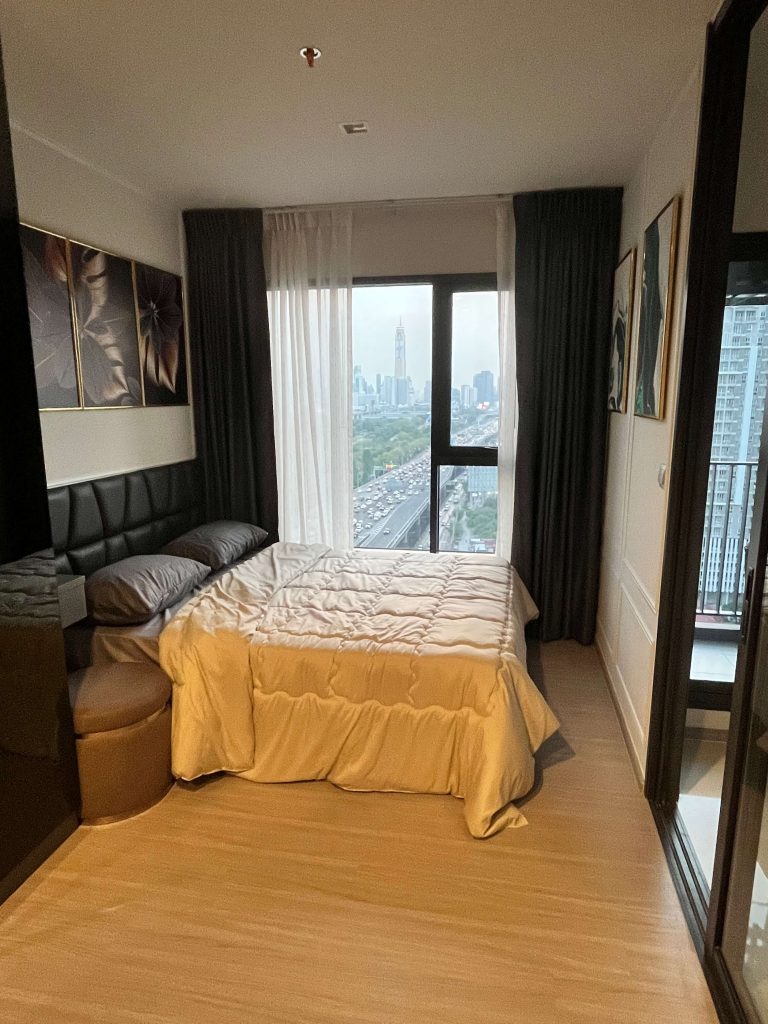
Bangkok has an enormous range of accommodation. The difference between a local apartment on the outskirts and a modern Sukhumvit condo with pool and gym can be $800/month apart. The BTS and MRT networks mean you don’t need to be in the most expensive area to have good access to everything — a few stops outside center cuts rent significantly.
Bangkok accommodation tiers 2026. Long-term leases (1 year) always significantly cheaper per month than short-term or Airbnb.
We pay $1,100/month on Airbnb because we’re on a 90-day stay with no annual commitment. If we were staying a full year and signed a lease directly, a comparable condo in Sukhumvit would run 25,000–30,000 baht (~$750–$900/month) — saving $200–$300/month over Airbnb pricing.
Best Areas to Stay in Bangkok
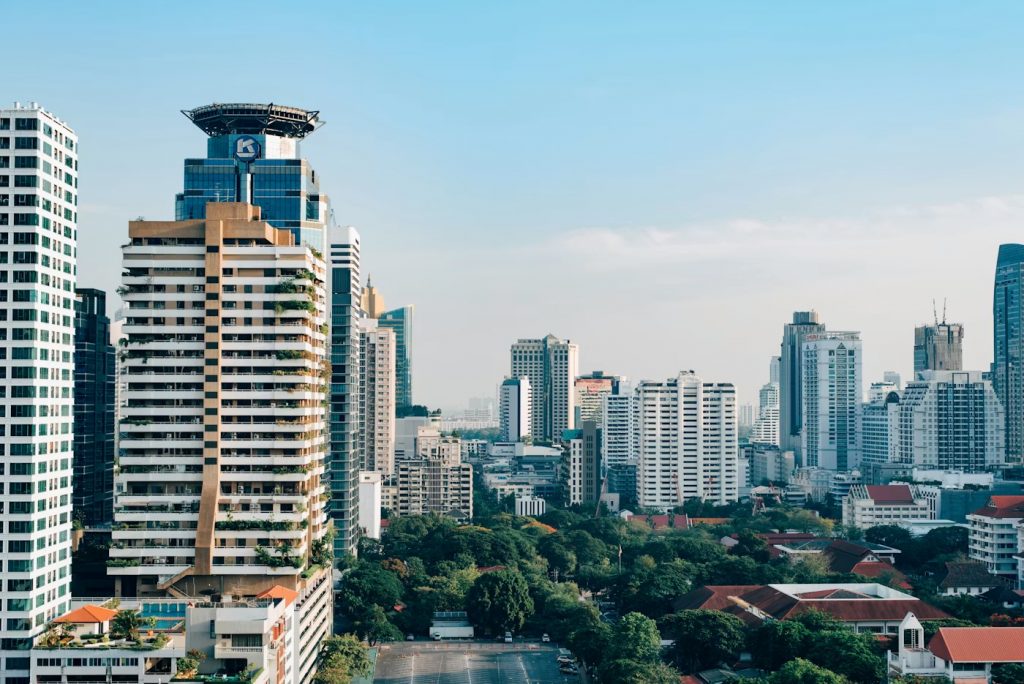
After staying in most of Bangkok’s major expat neighborhoods, here’s the honest ranking:
- Sukhumvit (Asoke / Phrom Phong). Both BTS and MRT lines within a 5-minute walk. Restaurants, street stalls, and modern malls all walkable. Keeps transport costs low and keeps your daily life convenient without constant taxis.
- Ari — Best for a local feel. Good café and food scene, walkable, easy BTS access without the heavy commercial density of central Sukhumvit. Popular with younger expats and long-term residents.
- Phra Khanong — Best value in the Sukhumvit corridor. Quieter and more residential, but still on the BTS line. More authentic Bangkok lifestyle at significantly lower rent than Asoke or Thong Lo. Strong growing digital nomad community.
- Thong Lo — Premium lifestyle, premium price. Bangkok’s most upscale expat neighborhood. Trendy cafés, coworking spaces, international restaurants, strong nightlife scene. Worth it if budget allows and you want that environment. Rent and dining are noticeably higher than anywhere else on this list.
Food and Dining Costs in Bangkok
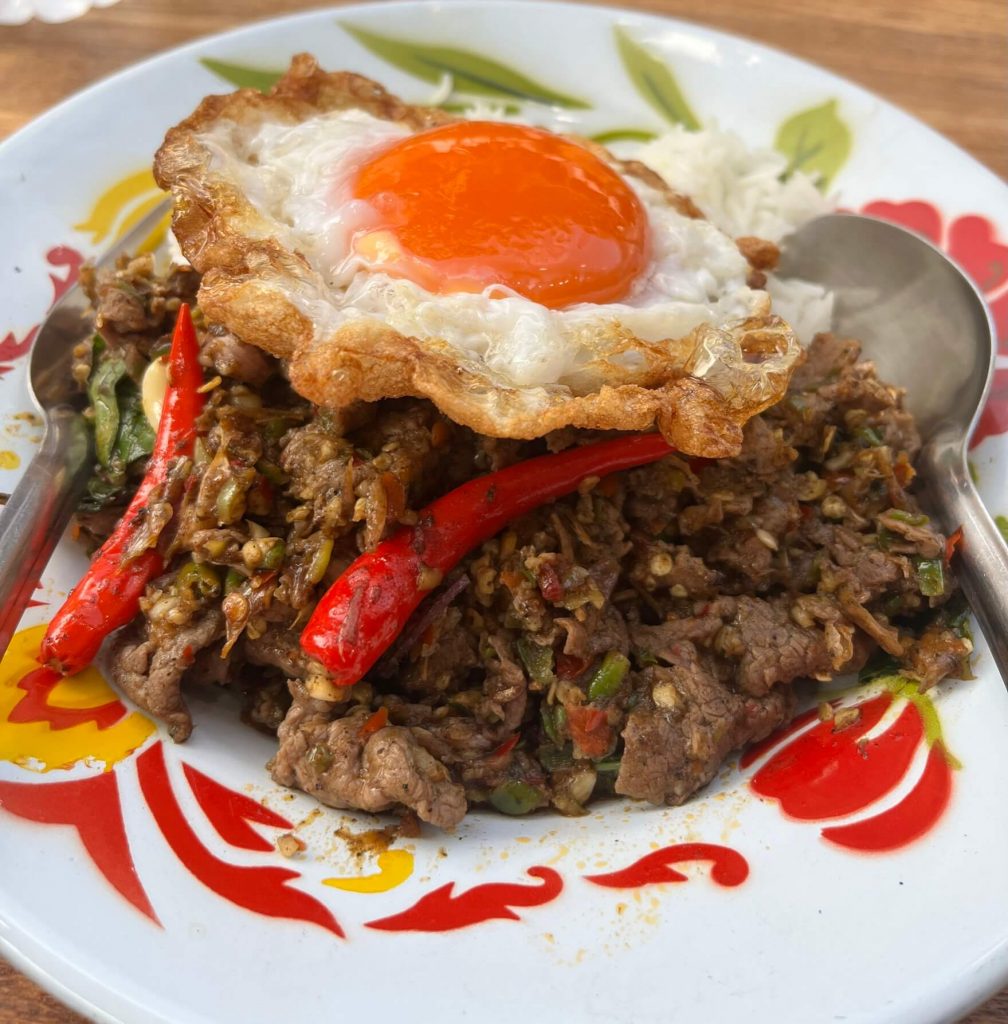
Food is genuinely one of the best things about Bangkok — and also one of the bigger line items if you’re eating a mix of local and Western. It’s more expensive than Vietnam, and honestly comparable to Japan if you’re hitting Western restaurants regularly. We spend around $500/month combined on restaurants and groceries as a couple — about half home cooking, half eating out.
Bangkok food and drink prices 2026 — local and expat areas.
If you cook at home and eat local most days, food is very affordable. If you want Western food daily and coffee from specialty cafes, budget $600–$900/month per person. Western supermarkets like Villa Market and Tops charge near-Western prices on imported goods — local markets and Big C/Lotus are far better value.
Transportation Costs in Bangkok
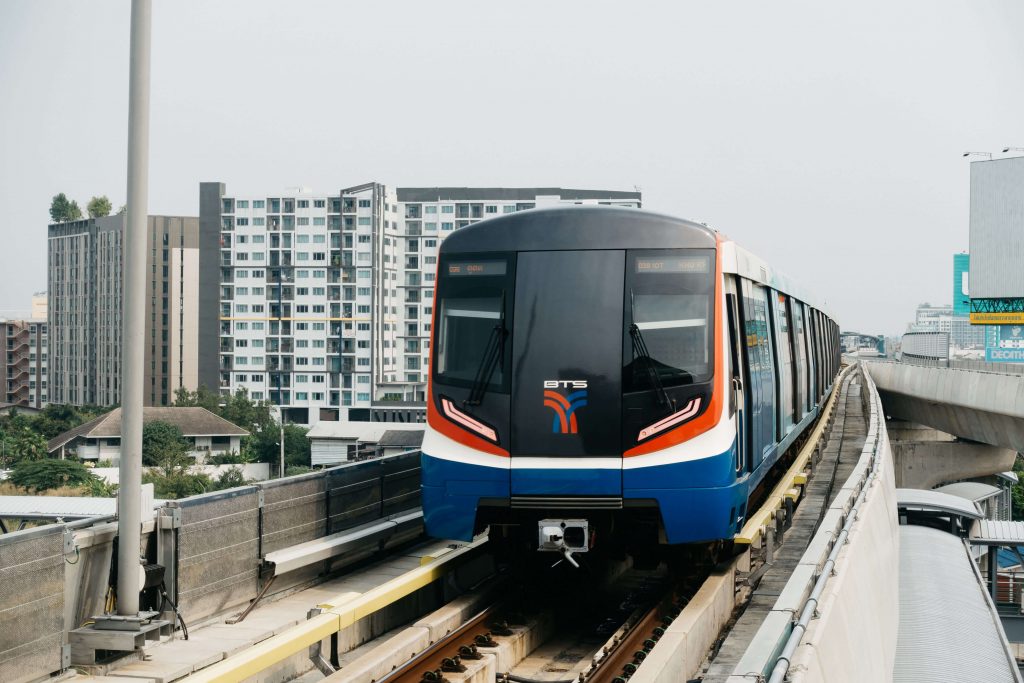
Bangkok has one of Southeast Asia’s best public transit networks and it’s a major part of why Sukhumvit works as a base. We budget $70/month as a couple — a mix of metro and ride-hailing with very little taxi use.
- BTS Skytrain + MRT: 17–70 THB ($0.50–$2.10) per ride depending on distance. Fast, reliable, and air-conditioned. For shorter hops I use the train — it’s faster than any surface option. Frequent use adds up, but for 2–4 trips a day it’s still very affordable.
- Grab vs Bolt: Both widely available. I prefer Bolt — consistently better pricing than Grab for most routes. Most city rides run 80–150 THB ($2.50–$4.50).
- Metered taxis: Still available — always confirm the driver uses the meter. Base fare 35 THB, most city trips 80–200 THB.
- Bus: 15–20 THB for air-conditioned buses. Excellent value but routes take time to learn and wait times can run 15–30 minutes.
Healthcare Cost in Bangkok
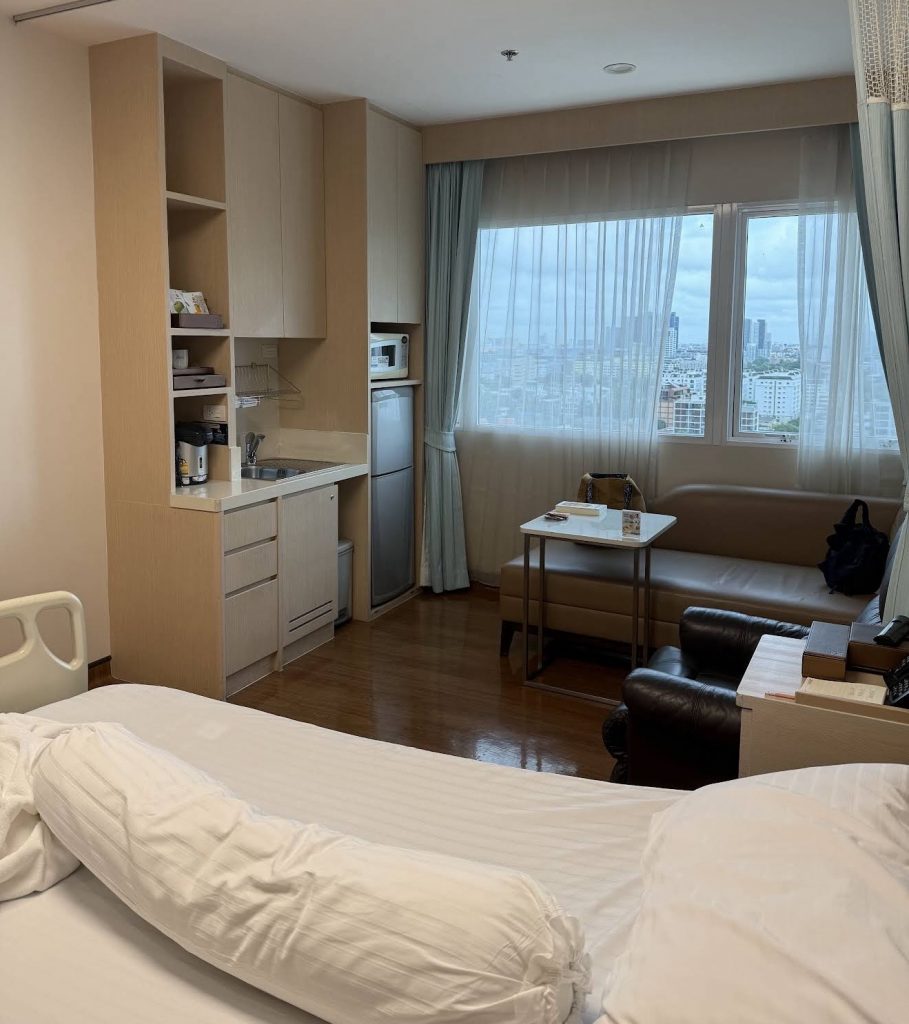
Thailand has the best private hospital system in Southeast Asia — and it’s not particularly close. Bangkok’s international hospitals are used by medical tourists from around the world specifically because the quality rivals Western standards at a fraction of the cost.
Major International Hospitals
- Bumrungrad International — Bangkok’s most well-known expat hospital. English-speaking staff throughout, internationally accredited, handles complex procedures. Slightly more expensive than other options but the service level reflects it.
- Bangkok Hospital — Large network across Thailand. Strong across most specialties, good English, more accessible pricing than Bumrungrad for routine care.
- Samitivej Hospital — Popular with expat families. Excellent pediatric and general care, English throughout.
What Things Cost
Bangkok private hospital approximate costs 2026 — varies by facility and complexity
International Health Insurance
We use Genki Explorer for long-term travel health insurance — it covers us across Southeast Asia and beyond, with no fixed home country requirement and monthly billing. SafetyWing Nomad is the other popular option at a lower price point but more limited coverage. Both are far better than arriving uninsured.
If you’re committing to Thailand long-term (12+ months), upgrading to a dedicated international health insurance plan (Cigna Global, Allianz Care, AXA) gives you better coverage limits and access to the full Bumrungrad and Bangkok Hospital networks without out-of-pocket exposure. See my full comparison on the travel insurance page.
💡 One advantage Bangkok has over Vietnam: If something serious happens, you don’t have to fly somewhere. Bumrungrad handles everything including major surgery, cancer treatment, and complex procedures. In Da Nang or Nha Trang, serious conditions often mean flying to Bangkok. That’s a real factor in long-term retirement planning.
Entertainment and Nightlife Costs

Entertainment is where Bangkok budgets vary most wildly between people. We keep ours intentionally low at $50/month — occasional drinks out, activities, and that’s it. But the range goes very high very fast if nightlife is a priority.
Bangkok entertainment and activity costs 2026
⚠️ Nightlife warning: Bangkok’s bar and club scene is a genuine budget killer. Frequent nights out at premium venues can easily add $1,000–$2,000/month on top of your base costs. If that’s part of your lifestyle, budget for it honestly — don’t let it quietly blow up a budget you thought was under control.
Worth noting: activities like Muay Thai training, language classes, and specialty gyms are things people budget extra for — they’re not in our $2,231 baseline. If any of those are on your list, add $100–$400/month depending on frequency.
Airbnb vs Hotels in Bangkok
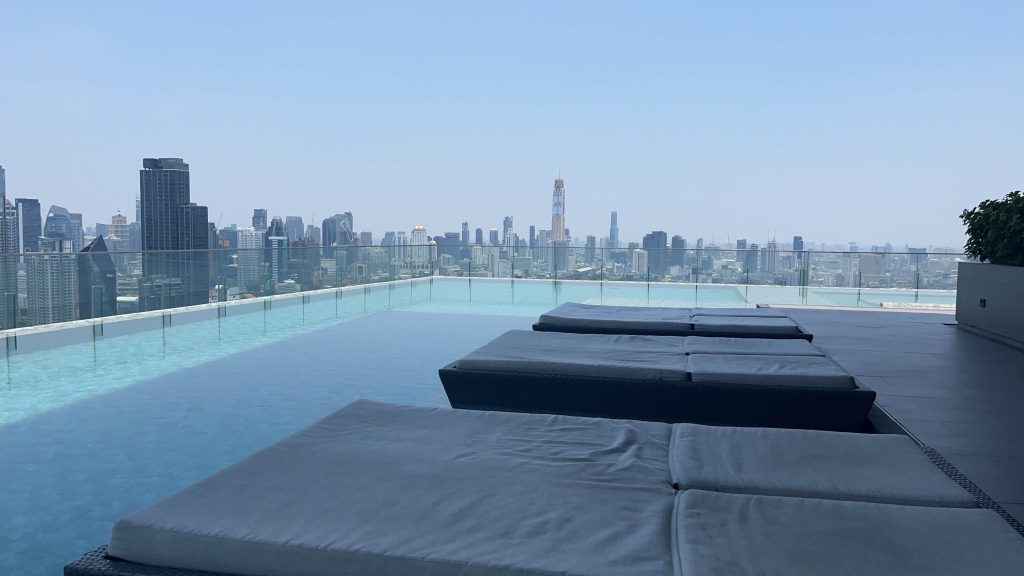
For a 90-day stay, Airbnb offers the best value in Bangkok. You can rent a modern condo that’s larger than a typical hotel room and comes with a kitchen, washing machine, workspace, pool, and gym—often for less than the price of a comparable hotel. It’s simply a better setup when you’re actually living in Bangkok instead of vacationing. You also avoid signing a one-year lease, and monthly discounts make longer stays even more affordable.
Bangkok accommodation options by type — 2026
Hotels become the better option when you’re collecting and redeeming hotel rewards points. Bangkok has strong IHG and Marriott Bonvoy coverage — the InterContinental, Holiday Inn, and Marriott properties in Sukhumvit are all points-redeemable. If you’re earning points through a travel credit card on your daily spending, those points can offset or eliminate hotel costs entirely for short stays. We’re actively building this strategy now after years of Airbnb-only.
Visa Options for Bangkok
Your visa strategy determines how long you can legally stay and how much stress you’re managing on top of just living your life. Thailand immigration has been increasingly scrutinizing frequent tourist re-entries — don’t plan around doing endless border runs.
Age 50+
- Non-Immigrant OA (Retirement Visa): The cleanest long-term option in Southeast Asia. Requires 800,000 THB (~$24,500) seasoned in a Thai bank account, or proof of 65,000 THB/month (~$2,000) pension or income. 1-year stay, renewable annually inside Thailand. No need to leave the country to renew.
Under 50
- Tourist Visa (TR): 30 days on arrival, extendable to 60 days at a local immigration office (~1,900 THB). What I currently use for Bangkok rotations — I stay under 60 days to avoid the 180-day tax residency threshold.
- DTV (Destination Thailand Visa): The best new option for under-50 slow travelers. Launched 2024, costs around $80 USD, valid 5 years, 180 days per entry with multiple entries allowed. Requires proof of $15,000+ in savings or remote income. I have the DTV — it’s excellent value over the 5-year term.
- Educational Visa (Non-Immigrant ED): 90 days renewable while enrolled in a Thai language school. A legitimate long-stay path and many expats use it to genuinely learn Thai while maintaining legal status. Requires actual class attendance.
Thailand visa options 2026 — always verify current requirements directly with Thai immigration
Tax Residency Warning
⚠️ Stay in Thailand 180 or more days in a calendar year and you become a Thai tax resident. Thailand updated its rules in 2024 to require tax residents to declare income brought into Thailand — including foreign pensions, investment withdrawals, and potentially Social Security. This is a significant development that catches many long-term expats off guard.
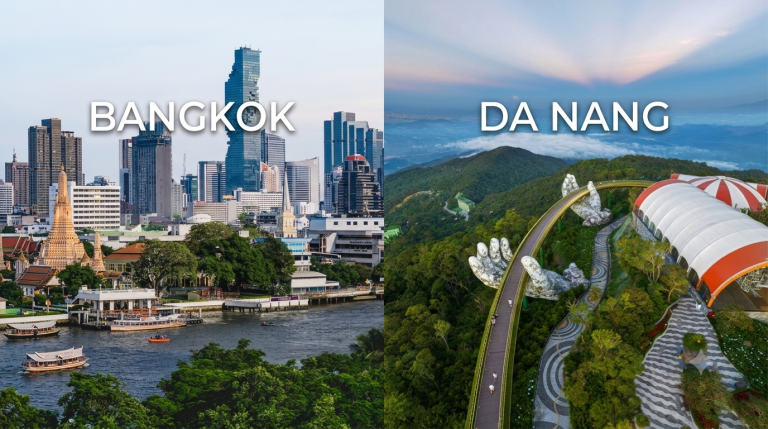
Bangkok vs Da Nang
These are my two bases and they serve different purposes. Bangkok is infrastructure, healthcare, food variety, and city energy. Da Nang is beach, simplicity, lower cost, and slower pace. I’d find it hard to choose one permanently — the rotation between both is what works. See the full comparison: Bangkok vs Da Nang — Which Is Better for Expats?
How Much Do You Need to Live in Bangkok?
Bangkok monthly budget by lifestyle — 2026, single person unless noted
$2,000/month is the floor for a comfortable life in Bangkok. If you want to start here, have $3,000/month available — the buffer matters. See the full guide to retiring in Southeast Asia for how Bangkok fits into a broader regional budget.
Pros and Cons
🟢 Pros
- World-class BTS/MRT public transport
- Best private hospitals in Southeast Asia
- Incredible food variety at every price point
- Modern condos with pool and gym widely available
- Strong retirement visa options (especially 50+)
- Cultural richness — temples, markets, food scene
- Easy regional flights to Vietnam, Japan, Korea, Bali
🔴 Cons
- Traffic congestion — serious during rush hours
- Air quality (PM2.5) spikes November–April
- Heat and humidity year-round — relentless in April/May
- Nightlife can destroy budgets fast
- 180-day tax residency threshold requires careful planning
- No beach — requires a trip to get to the coast
Is Bangkok Worth It in 2026?
After four years rotating between Bangkok and Vietnam, I’d still choose Bangkok as my primary city in Southeast Asia. It isn’t the cheapest destination anymore, but when you combine world-class healthcare, excellent public transportation, incredible food, modern apartments, and easy regional travel, it’s one of the best values in the world. If your budget is around $2,500 per month, you’ll enjoy a lifestyle that would cost two or three times as much in many Western cities.
Could you spend less? Absolutely. Living outside central Sukhumvit, eating mostly local food, and signing a one-year lease could reduce your monthly budget by several hundred dollars. Our numbers reflect the lifestyle we actually choose—not the cheapest way to live in Bangkok.
If you’re planning your move or an extended stay, be sure to read my Bangkok Travel Guide, where I cover the city’s top neighborhoods, attractions, transportation tips, and practical advice to help you settle in quickly.
How much does it cost to live in Bangkok in 2026?
A couple living comfortably in Bangkok spends around $2,231/month — Sukhumvit area Airbnb, cooking some meals at home, regular dining out, BTS and Grab transport, and travel insurance. Solo travelers can expect roughly $1,550/month. Budget a minimum of $2,000/month for a comfortable lifestyle — $2,500–$3,000 if you want regional travel and savings buffer.
Is Bangkok cheaper than Vietnam for expats?
No — Bangkok is moderately more expensive than Da Nang or Nha Trang for comparable quality accommodation and food. Rent in Bangkok’s Sukhumvit area runs $750–$1,200/month for a decent condo, versus $600–$900 in Da Nang’s beach area. Food costs are also higher in Bangkok if you mix Western dining. That said, Bangkok offers better healthcare, more visa stability, and superior infrastructure.
What is the best area to live in Bangkok?
Sukhumvit — specifically around Asoke or Phrom Phong — is the best base for expats and long-term travelers. Both BTS and MRT lines are within walking distance, keeping transport costs low and the whole city accessible. Phra Khanong offers better value on the same BTS line. Ari has a strong local feel with good cafés. Thong Lo is premium — great lifestyle, noticeably higher prices.
What visa do I need to live in Bangkok long-term?
Age 50+: Non-Immigrant OA retirement visa is the cleanest option — requires ~$24,500 in a Thai bank or $2,000/month income, grants 1-year renewable stays. Under 50: The DTV (Destination Thailand Visa, launched 2024) is excellent — $80, valid 5 years, 180 days per entry, requires $15,000 savings proof. Tourist visas give 30 days extendable to 60. Educational visas allow 90-day renewable stays via Thai language school enrollment.
How much does healthcare cost in Bangkok?
Bangkok has world-class private hospitals at a fraction of Western prices. A GP consultation runs $30–$80 at international hospitals like Bumrungrad or Bangkok Hospital. Specialist consultations $60–$150. Dental cleaning $30–$60. Most expats combine travel health insurance (SafetyWing Nomad or Genki Explorer) with the knowledge that even without insurance, most routine care is affordable. For serious conditions, having proper coverage is essential.
Do I become a tax resident if I live in Bangkok?
Yes — if you stay in Thailand for 180 or more days in a calendar year, you become a Thai tax resident and are required to declare income brought into the country, including foreign pensions and investment withdrawals. Many expats manage this by rotating between Thailand, Vietnam, and other countries to stay under the 180-day threshold. Speak with a tax professional specializing in US expat taxes before committing to 180+ days annually.