Living in Bangkok for under $1,000 a month is absolutely possible, but your lifestyle will look very different from someone spending twice that amount. Bangkok can be one of the world’s most affordable capital cities if you’re willing to live like a local rather than chase luxury. In this guide, I’ll show you exactly what a monthly budget of around 30,000 baht can realistically buy—and where you’ll need to make compromises.
Bangkok Budget Living
What Does $1,000 a Month Really Mean?
For this guide, I’m using a monthly budget of 30,000 baht, which is usually around $900–$1,000 USD, depending on the exchange rate. Since you’ll be paying for everything in baht, it’s a more practical way to think about your budget than focusing on the dollar amount. At 30,000 baht a month, you’ll be able to afford a private apartment, eat mostly local food, use Bangkok’s excellent public transportation, and still have room in your budget for sightseeing and other everyday expenses. It isn’t a luxury lifestyle, but it’s enough to live comfortably if you keep your expectations realistic.
| Expense | Amount (Baht) |
|---|---|
| Rent | 10,000 |
| Electricity | 1,250 |
| Water | 250 |
| Unlimited Phone Data | 750 |
| Food | 12,000 |
| Transportation | 1,750 |
| Entertainment | 2,000 |
| Household & Misc. | 1,000 |
| Emergency Buffer | 1,000 |
| Total | 30,000 |
The Apartment You’ll Get
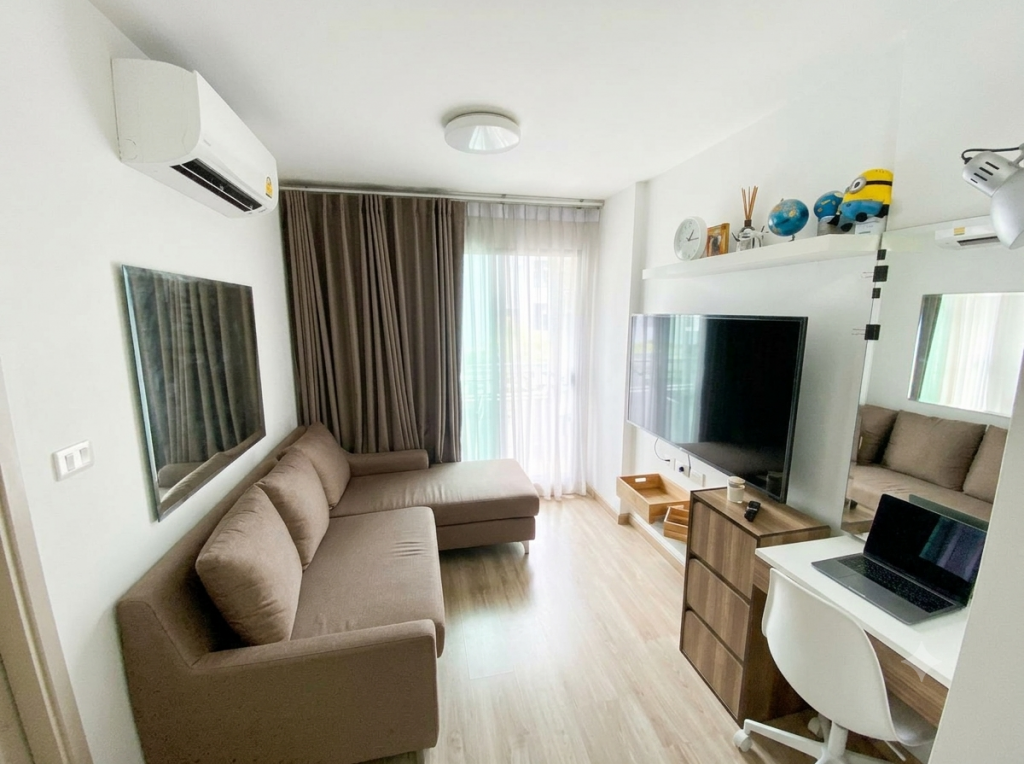
Finding an apartment in Bangkok takes a little more effort than simply browsing online listings. Websites like DDproperty and FazWaz are a good place to start, but many available units aren’t advertised online. Once you’ve narrowed down the neighborhood where you want to live, the best approach is to explore it in person. Walk into apartment buildings and condo juristic offices and ask what units they have available.
While it’s possible to find apartments for 6,000–8,000 baht per month, I recommend budgeting 10,000 baht. At this price point, you should expect an older apartment or condo rather than a brand-new, modern unit. Most will be clean, furnished, and have air conditioning, but the finishes and furniture may be dated. If your goal is to stay under a 30,000-baht monthly budget, this is one of the biggest compromises you’ll make.
Some neighborhoods worth considering include Lat Phrao, Chatuchak, Huai Khwang, Punnawithi, and Udom Suk. These areas offer a good balance of affordability, convenient access to the BTS or MRT, plenty of local restaurants, and everything you need for day-to-day life without paying premium prices.
What You’ll Eat
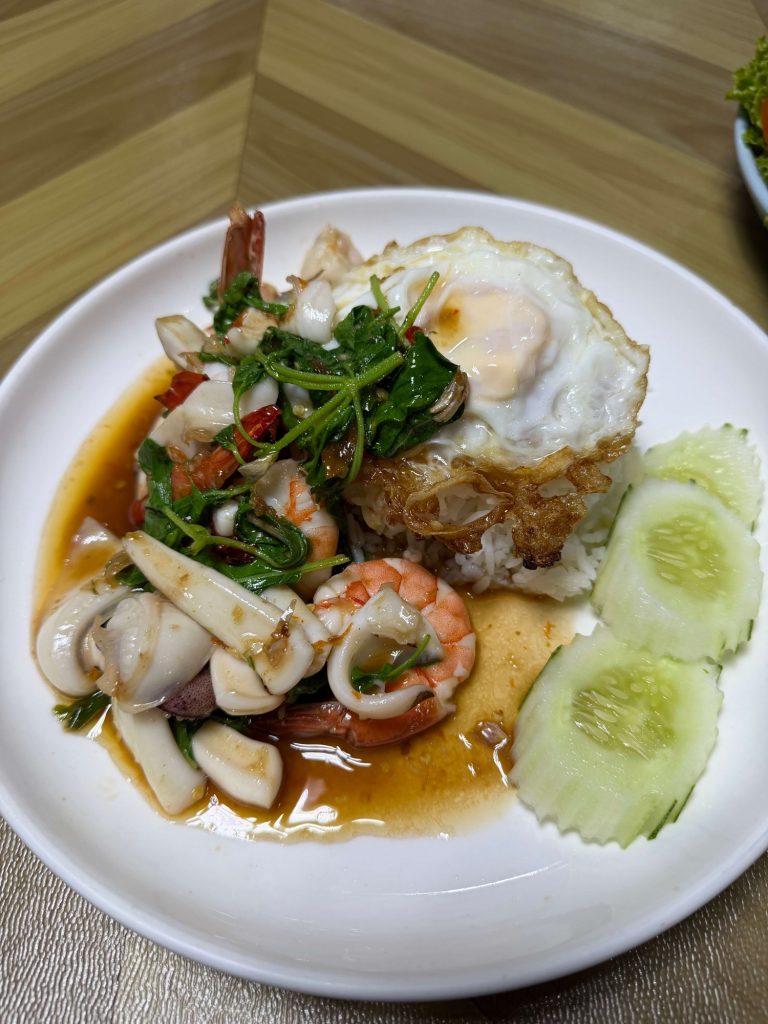
Food is one of Bangkok’s biggest advantages. Eating local is not only affordable, but it’s also one of the best parts of living in the city. While you can find meals for 50–80 baht at street stalls, those prices add up quickly once you factor in three meals a day, drinks, coffee, and the occasional snack.
I recommend budgeting at least 12,000 baht per month for food. That gives you the flexibility to eat mostly at local restaurants, food courts, and street markets without constantly worrying about every baht you spend.
If you want to stretch your budget further, shop at local fresh markets instead of supermarkets. Buying eggs, rice, fresh vegetables, fruit, and other basic ingredients lets you prepare simple meals at home for a fraction of the cost of eating out every day. You don’t need to cook every meal, but preparing breakfast or dinner a few times a week can free up extra money for sightseeing or other activities.
Transportation

Choosing the right neighborhood can save you thousands of baht each year. Living within walking distance of restaurants, markets, and everyday conveniences means you won’t need to rely on transportation nearly as often.
While Bangkok’s BTS and MRT systems are clean and efficient, the fares can add up if you use them every day. Instead, use local buses whenever possible, walk for shorter trips, and take Grab Bike when you need to get somewhere quickly. These options are usually much cheaper than relying on taxis or Grab cars.
What You’ll Actually Do

Living on a 30,000-baht budget doesn’t mean staying home all day. One of the best things about Bangkok is that many of the city’s top attractions are free or inexpensive.
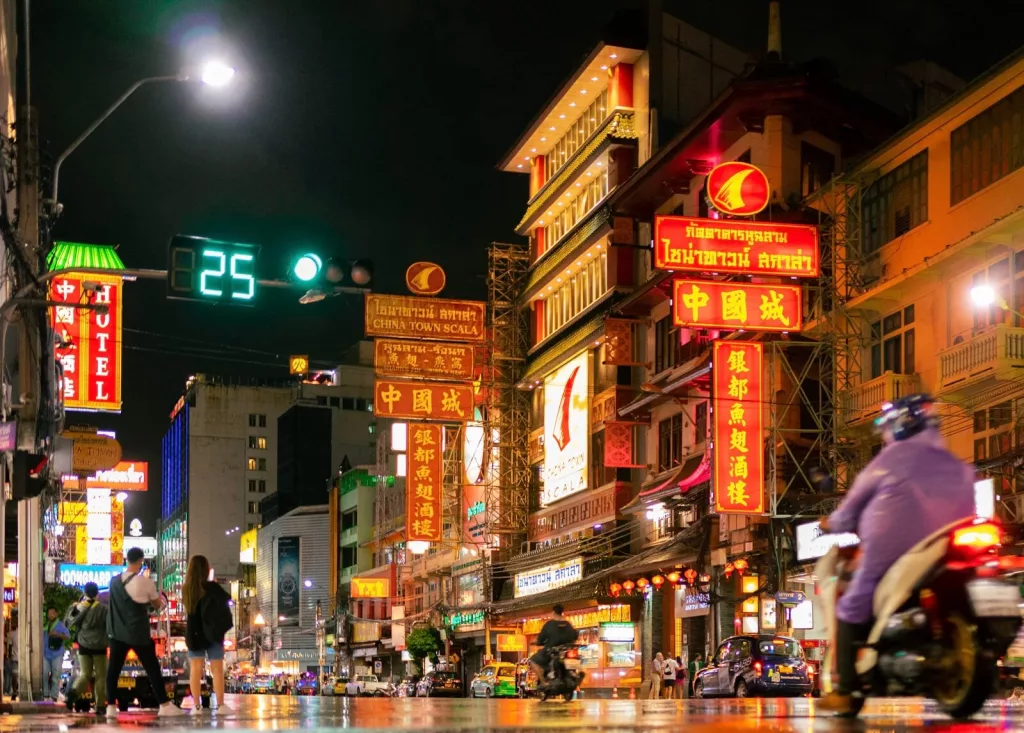
Spend your mornings exploring neighborhoods or relaxing in parks like Benjakitti and Chatuchak. Browse shopping malls, wander through local markets, visit temples, or spend an evening exploring Chinatown. Bangkok also has countless cafés where you can enjoy a coffee while people-watching or getting some work done.
Not every weekend has to involve expensive nightlife or rooftop bars. Some of the city’s best experiences—walking through a night market, trying a new street food stall, watching the sunset in the park, or discovering a neighborhood you’ve never visited before—cost very little. If you’re willing to embrace a slower pace of life, you’ll find there’s always something to do without spending much money.
Klook.comWhat You’ll Have to Give Up
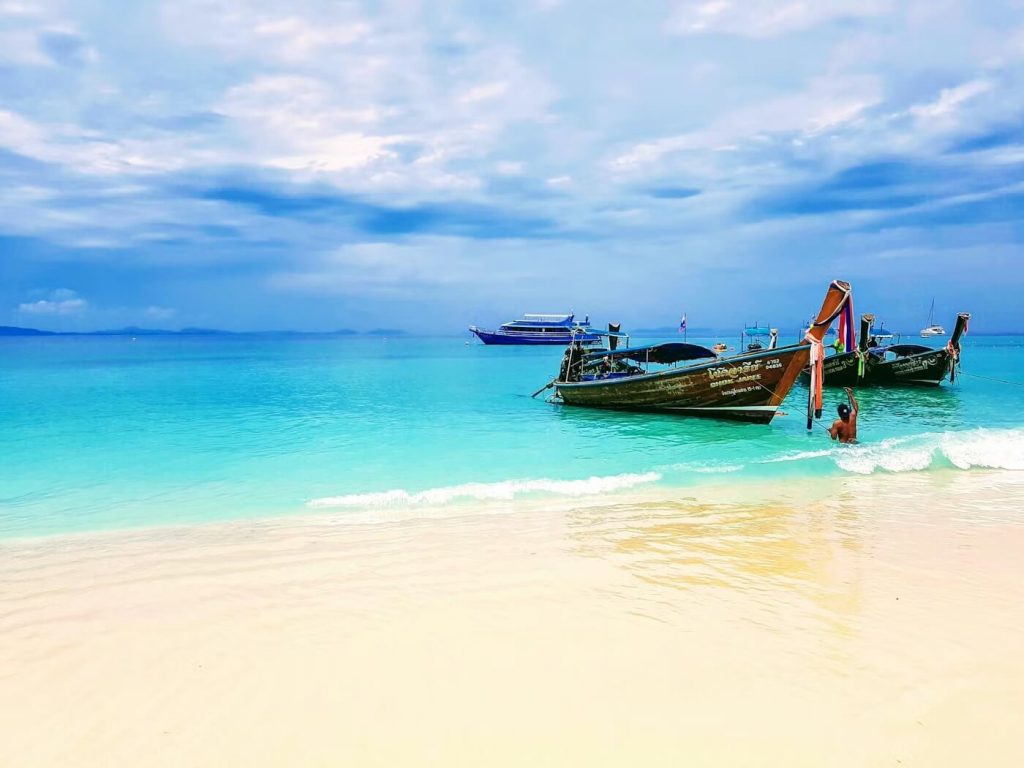
You’ll likely eat local food most of the time, save Western restaurants for special occasions, and rely on walking, buses, or Grab Bike instead of taking Grab everywhere. Nights out at rooftop bars, frequent shopping sprees, and weekend getaways won’t fit comfortably into this budget either.
The good news is that you’re not giving up the Bangkok experience—just the expensive version of it. If you’re willing to live like a local, you’ll find that many of the city’s best experiences are affordable or even free.
A Typical Day Living on $1,000
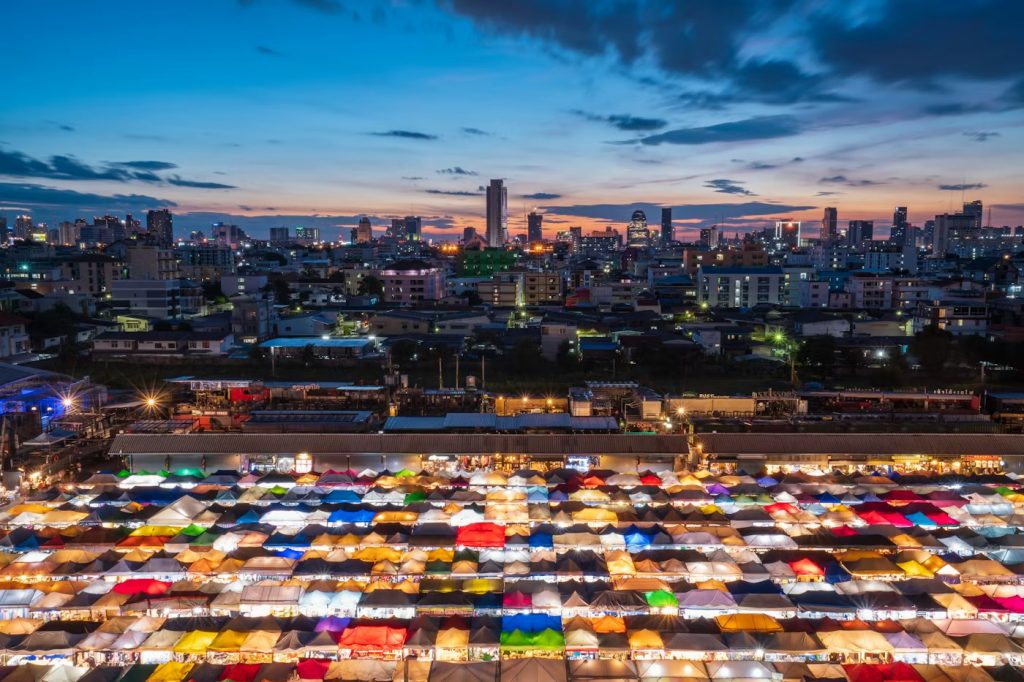
A typical day on a 30,000-baht budget is simple, but it doesn’t have to be boring. This is one reason I recommend budgeting 10,000 baht for your apartment. Many older condos at this price still include access to a swimming pool and fitness center, giving you a place to exercise and relax without paying for a gym membership.
Start your morning with a workout or swim, then grab an inexpensive coffee or tea for 40–50 baht if you feel like treating yourself. During the hottest part of the day, head to one of Bangkok’s many shopping malls. You don’t have to spend money there—most have comfortable seating areas where you can read a book, browse your phone, or simply enjoy the air conditioning.
When you’re ready to explore, hop on a local bus to a different neighborhood. Spend the afternoon walking through a park or green space, browsing the local mall, and trying something new at the food court before heading home. It may not be a luxury lifestyle, but it’s a relaxed, affordable way to enjoy everything Bangkok has to offer without constantly worrying about money.
Tips to Make $1,000 Go Further
- Choose a neighborhood with everything you need within walking distance.
- Visit apartments in person instead of relying only on online listings.
- Eat at local restaurants, food courts, and street markets instead of Western restaurants.
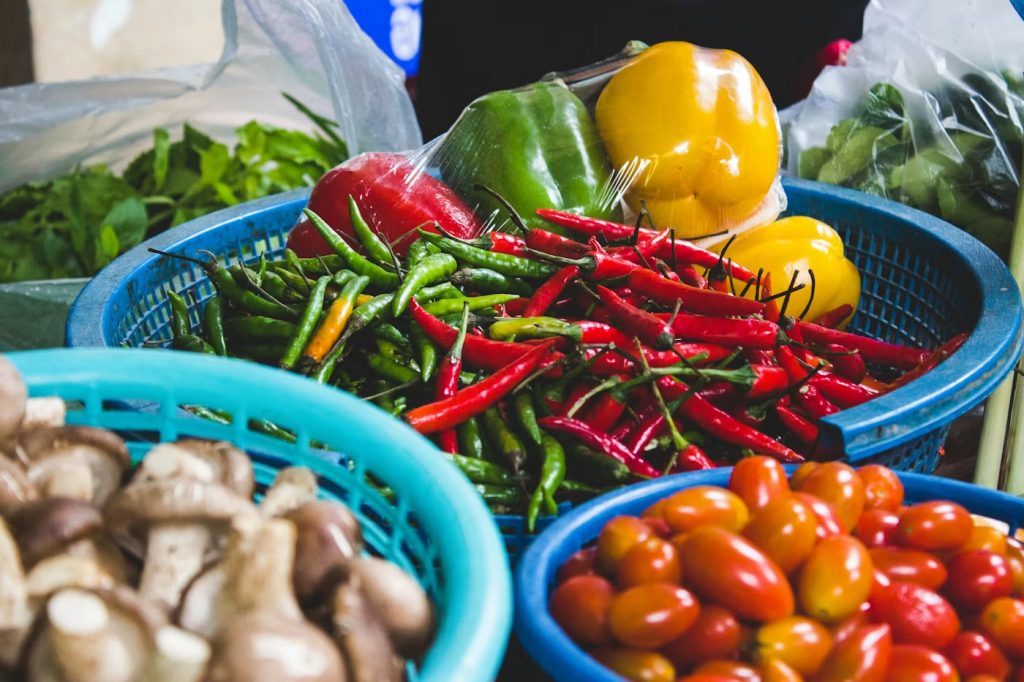
- Shop at fresh markets and cook simple meals at home a few times a week.
- Walk whenever possible, use local buses for longer trips, and save Grab for when you really need it.
- Take advantage of Bangkok’s free attractions, including parks, temples, markets, and shopping malls.
- Keep an emergency buffer in your monthly budget for unexpected expenses.
Don’t Forget About Visa Requirements

This guide focuses on your monthly living expenses, but if you’re planning to stay in Thailand long term, you’ll also need to consider visa requirements.
For example, a Retirement Visa requires meeting Thailand’s financial requirements, which may include maintaining 800,000 baht in a Thai bank account or qualifying through another approved option. An Education (ED) Visa requires enrollment in a qualifying school, while the Destination Thailand Visa (DTV) has its own eligibility requirements and application fees.
These costs and financial requirements aren’t included in the 30,000-baht monthly budget.
Final Thoughts
While you can technically live in Bangkok on $1,000 a month, you’re stretching your budget razor thin. There isn’t much room for unexpected expenses, and even a single medical emergency, major purchase, or trip home could quickly derail your finances.
It’s also important to remember that this budget only covers your monthly living expenses. If you’re planning to stay in Thailand long term, many visa options have additional financial requirements. Depending on the visa, you may need to maintain 500,000–800,000 baht in a Thai bank account or meet other eligibility criteria.
Personally, I don’t recommend moving to Bangkok with only a $1,000 monthly income. I think $2,000 per month is a much more comfortable minimum, while $3,000 per month gives you the flexibility to enjoy the city, handle unexpected expenses, and save for the future.
If you’re curious what it actually costs to live in Bangkok, be sure to check out my detailed guide where I break down my real monthly expenses living abroad in Thailand.
Can you really live in Bangkok for under $1,000 a month?
Yes, it’s possible if you live like a local. Renting an older apartment, eating mostly Thai food, using public transportation, and limiting luxury spending can keep your monthly expenses around 30,000 baht.
Is Bangkok cheaper than other cities in Southeast Asia?
Bangkok is generally more affordable than Singapore and Kuala Lumpur, but more expensive than cities like Chiang Mai or Da Nang. It offers one of the best balances between affordability, modern infrastructure, and things to do.
What’s the biggest expense when living in Bangkok?
Rent is usually your largest monthly expense, followed by food. Choosing the right neighborhood can significantly reduce both your housing and transportation costs.
Can retirees live comfortably in Bangkok?
Yes, many retirees enjoy a comfortable lifestyle in Bangkok, but I recommend budgeting at least $2,000 per month for greater financial security. You’ll also need to meet the financial requirements for a long-term retirement visa.
How much money do I recommend for living in Bangkok?
While you can survive on $1,000 a month, I recommend having at least $2,000 per month, with $3,000 per month providing a much more comfortable lifestyle and room for unexpected expenses.