
Most retirees should budget $2,500–$3,000 per month for a comfortable lifestyle in Southeast Asia in 2026. While it’s possible to live on less, having around $3,000/month provides flexibility for healthcare, travel, inflation, and unexpected expenses. Based on the 4.5% rule, that means having roughly $660,000–$800,000 saved — or a reliable income source like Social Security or a pension that covers it.
More Americans are considering a move abroad, and Southeast Asia continues to attract retirees, digital nomads, and long-term travelers looking for a lower cost of living and a higher quality of life. After spending the past four years living between Thailand and Vietnam, we’ve learned what it really costs to live comfortably in the region. This guide is based on our real experience and current 2026 prices. We’ll show you how much money you actually need to retire in Southeast Asia, which countries offer the best value, the visa options to consider, and the mistakes that cost people thousands of dollars.
Why Trust This Guide?
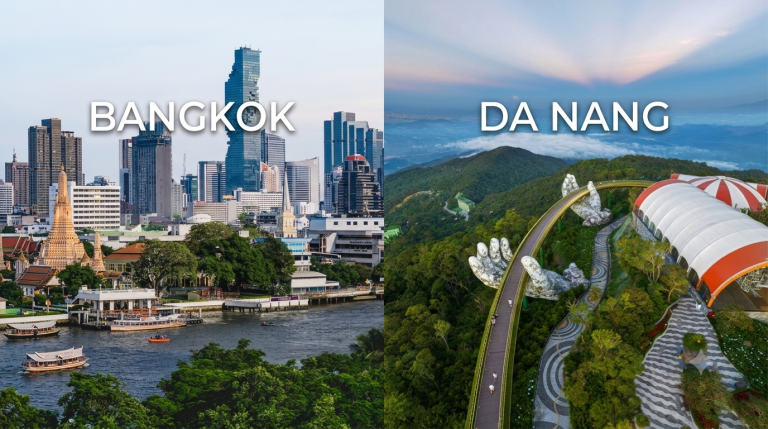
I’ve been traveling to Thailand every year since 2010, and for the past four years we’ve been living between Thailand and Vietnam, rotating between Bangkok and Da Nang while slow traveling throughout Southeast Asia. Every budget figure in this guide is based on our actual 2026 expenses from living, renting, eating, and traveling across the region—not crowdsourced estimates, outdated cost-of-living databases, or theoretical budgets.
Country Comparison at a Glance
Here’s how the four destinations we recommend compare across what matters most for long-term retirement living — based on four years of firsthand experience.
Southeast Asia Retirement Destination Comparison
| Country | Cost & Budget | Visa Options | Healthcare | Walkability | Overall Value |
|---|---|---|---|---|---|
| 🇹🇭Thailand | ★★★★☆ Good | ★★★★★ Excellent (Age 50+) | ★★★★★ World-Class | ★★★★☆ Highly Walkable | Great |
| 🇻🇳Vietnam | ★★★★★ Unbeatable Value | ★★★☆☆ 90-Day Loop Only | ★★★★☆ Good Private Care | ★★★★★ Excellent (Coastal) | Exceptional |
| 🇲🇾Malaysia | ★★★★☆ Moderate-Low | ★★★★☆ Stable (High Deposit) | ★★★★★ Superb / English | ★★★☆☆ Car/Grab Reliant | Great |
| 🇮🇩Bali | ★★★☆☆ Rising Rapidly | ★★★☆☆ 6-Month Social Max | ★★★☆☆ Basic / Evac Needed | ★★☆☆☆ Poor / Traffic | Fair |
How Much You Actually Need
Yes, you can technically survive in Southeast Asia on $1,000 a month — bare bones apartment, mostly street food, minimal travel, free activities. But that’s not retiring abroad, that’s just being broke somewhere warmer. I’m not going to promote that as a lifestyle goal.
If you want modern accommodation, Western amenities when you want them, and an actual quality of life — here’s the real range:
$2,000/mo
Minimum comfortable
Modern apartment, decent food options, shopping, insurance, basic activities
$3,000/mo
Recommended starting point
Options, savings buffer, room to travel, reinvest what you don’t spend
My recommendation is to have $3,000/month before you make the move. That extra $1,000 above the minimum is what gives you real options — save in the months you spend less, reinvest it, take a regional trip, absorb a price increase without stress. You came here for less financial pressure, not more.
⚠️ $2,000/month is a baseline. It doesn’t include a premium gym membership, Muay Thai classes, language school, concerts, clubs, scuba diving, or regular adventure activities. If those are part of your lifestyle, budget more — those extras can easily add $300–$700/month depending on how deep you go.
As a couple, we were spending $1,500–$2,000/month a few years ago. We’re now closer to $2,500/month — and that includes flights, regional travel, and nicer hotels on occasion. Popular beach destinations like Koh Samui and Phuket have gotten out of hand with overtourism and price jumps. Other parts of Thailand are still very reasonable — it’s the tourist-heavy hotspots that have gone off the rails.
How Much Do You Need Saved to Retire in Southeast Asia?
Don’t chase a magic retirement number. Build reliable monthly income, keep a healthy emergency fund and have investments of at least $100,000–$200,000, and make sure your lifestyle costs less than the money coming in each month.
Retirement Savings Targets by Lifestyle
Calculated using the 4.5% safe withdrawal rule for current 2026 regional pricing.
| Monthly Spend | Annual Outlay | Nest Egg Needed | Target Lifestyle |
|---|---|---|---|
| $2,000 /mo | $24,000 /yr | $533,333 | Comfortable Minimum Perfect for localized living in Vietnam or Thailand. |
| $2,500 /mo | $30,000 /yr | $666,667 | Regional Flexibility Covers comfortable expat life across most destinations. |
| $3,000 /mo | $36,000 /yr | $800,000 ★ Recommended Target | The Sweet Spot Includes freedom buffer, cash savings & regional travel. |
| $3,500 /mo | $42,000 /yr | $933,333 | Premium Expat Lifestyle Nicer upscale condos, top-tier healthcare & zero budget stress. |
💡 Don’t have $800k saved? You don’t necessarily need the full portfolio if you have Social Security, a pension, rental income, or part-time remote work supplementing it. Many people retire abroad on a combination of modest savings plus a reliable monthly income stream. See the Social Security section below.
The Inflation Problem Nobody Talks About
Here’s what the “retire in Asia cheap” articles never mention: Southeast Asia has seen significant price increases over the last four years, and if you’re planning on a fixed income, this needs to be central to your budget planning.
When I moved to Bangkok in 2022, I was paying $600/month for a Sukhumvit area Airbnb in Asoke. That same place now costs $1,200/month. Decent hotels — clean rooms, good reviews, close to BTS or MRT — went from $20–$30 a night to $45–$60. Prices have roughly doubled in four years driven by post-COVID travel demand, currency movements, and growing expat interest in the region.
⚠️ Don’t overlook your emergency fund. Living abroad doesn’t eliminate unexpected expenses. Medical emergencies, flights back home, visa issues, family emergencies, replacing a stolen laptop or phone csn quickly become expensive. I recommend keeping 6-12 months of living expenses in a High Yield Savings Account.
Living Mode vs Vacation Mode

One of the biggest mistakes people make when budgeting for life abroad: they think like a tourist. Popular vacation destinations — beach resorts, tourist zones, hotel strips — are priced for people who saved up all year and are here for one or two weeks in celebration mode. Those prices are real, and they’re high by local standards.
We’re not in vacation mode. We’re in living mode. That’s a completely different relationship with a place and a completely different price reality. When you’re living somewhere for 90 days, you find the local restaurant three streets off the beach that charges a third of the tourist price for better food. You figure out which markets locals actually use. You negotiate monthly rates instead of paying nightly.
💡 Do your research before you commit to anything. Find Facebook expat groups for your destination before you arrive. See what locals and long-term residents are actually paying for accommodation. Learn the difference between tourist-zone pricing and local market pricing. That research can save you $200–$400/month on accommodation alone — $2,400–$4,800 a year.
Best Countries to Retire in Southeast Asia
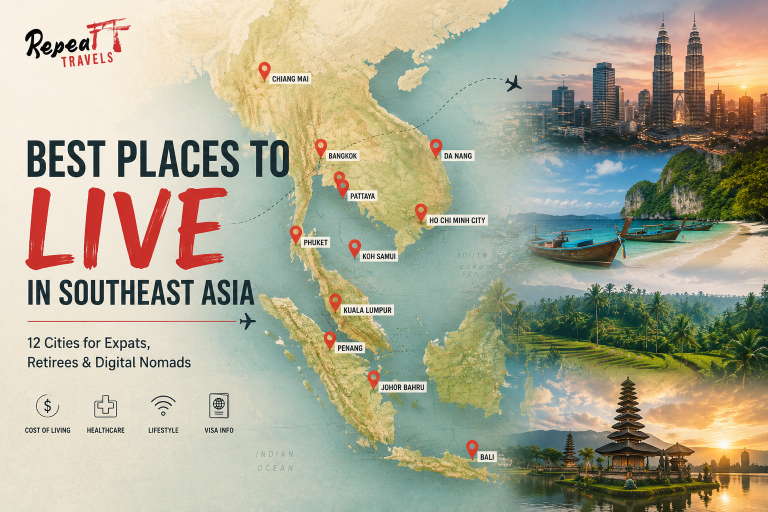
Four years of living across this region. These are the destinations I can recommend from personal experience. If you want a city-by-city breakdown of exactly where to base yourself, see our guide to the best places to live in Asia for American expats.
🇹🇭 Thailand
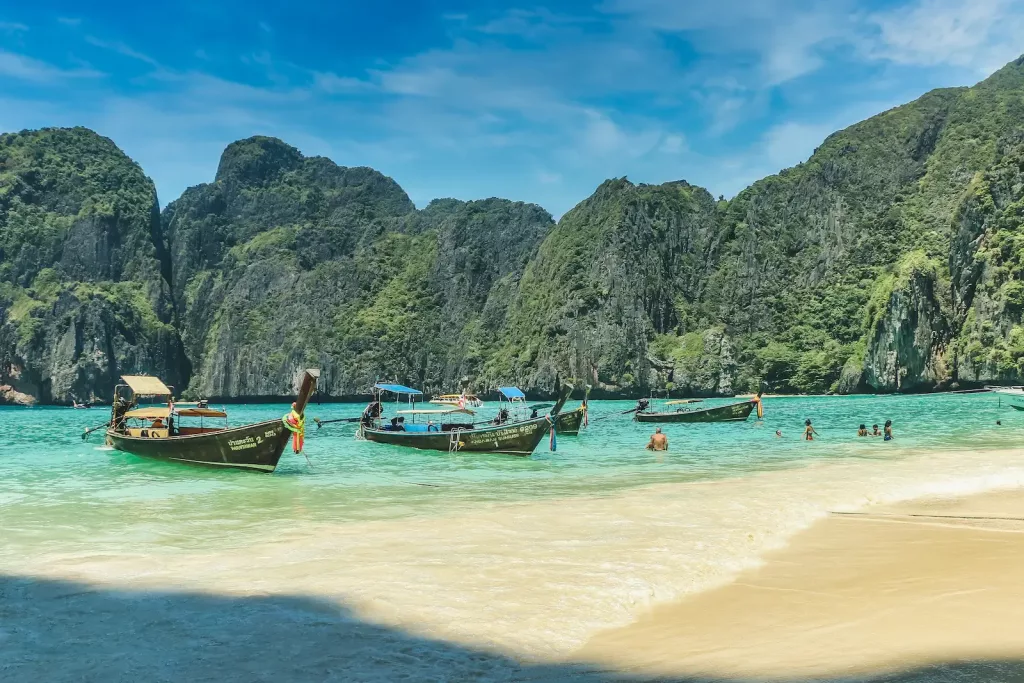
Best for: Infrastructure, food scene, expat community, healthcare, retirement visa
Base cities: Bangkok, Chiang Mai, Pattaya, Hua Hin, Isaan region
Thailand is one of the most established retirement destinations in Southeast Asia. After four years of using Bangkok as our primary base, we’ve settled into a routine that works: mornings in the condo’s co-working space, afternoons at the gym or pool, getting around on the BTS instead of relying on taxis, and evenings exploring the city. Bangkok serves as our home base before we rotate to Da Nang for a few months each year, a lifestyle that keeps our annual costs manageable while preventing the burnout that can come from staying in one place year-round. The infrastructure is excellent, the healthcare is world-class, and everything you need is always within easy reach.
Accommodation in Thailand
- Budget condos (Bangkok, Pattaya, Hua Hin, Isaan): Older condos from around 10,000 baht/month (~$300). Functional, not luxurious.
- Modern Sukhumvit condos: Newer builds with gym and pool start at 20,000–30,000 baht/month (~$600–$900). Leases typically 1 year — 6-month leases exist but harder to find.
- Airbnb: Decent condos in good locations now run $1,000–$1,200/month for anything worth staying in long-term.
Food Costs in Thailand
Food is one of the bigger line items in Thailand — more expensive than Vietnam or Malaysia, honestly comparable to Japan if you’re mixing local and Western. As a couple we spend around $500/month on groceries and dining combined.
- Street food / night market: $2–$3 per dish
- Air-conditioned local restaurant: $5–$12 per plate
- Western meal (one person): $8–$12
- Western supermarket (Villa Market, Tops, Lotus): Near-Western prices on imported goods
⚠️ Tax residency warning: Stay in Thailand 180+ days in a calendar year and you become a Thai tax resident — required to file taxes on money brought into the country. Talk to a tax professional before committing to long-term Thailand residency. See the taxes section below.
→ Full breakdown: Bangkok Cost of Living Guide
🇻🇳 Vietnam

Best for: Value, beach lifestyle, walkability, food
Best cities: Da Nang, Ho Chi Minh City, Hanoi, Nha Trang
Vietnam is where we base ourselves when we’re not in Bangkok. Da Nang hits a rare combination of beach access, modern infrastructure, great food, and genuinely affordable living. Our most recent 90-day stay came in at around $2,000/month for two people — eating out almost every night, activities included. Nha Trang is worth adding to your shortlist: beach city, more laid-back, slightly cheaper, popular with long-term expats who want slower coastal living.
Accommodations
- Budget apartments (Da Nang, Nha Trang, Da Lat): Older or smaller studios from around 6,000,000–8,000,000 VND/month (~$240–$320). Functional, local style.
- Modern expat apartments (Da Nang An Thuong / HCMC District 2/7): Newer builds or serviced apartments with gym/pool access start at 10,000,000–15,000,000 VND/month (~$400–$600).
- Airbnb / Premium serviced rentals: Decent condos in prime city or beach locations run $700–$1,000/month for long-term stays.
Food Cost
- Street food / Local stalls (Pho, Banh Mi, Com Tam): $1.50–$2.50 per dish.
- Casual sit-down restaurant: $4–$7 per plate.
- Western meal / Cafe brunch: $6–$10.
- Supermarket shopping (WinMart, Lotte Mart): Highly affordable for local items, moderate premium on imported cheese/meat. As a couple, expect to spend around $350/month on groceries and dining combined.
Visa reality: No official retirement visa. You operate on a 90-day e-visa ($25/person), exit when it expires, reapply. Vietnam has tolerated this for years — but it’s informal tolerance, not a formal right.
→ Full breakdown: Da Nang Cost of Living Guide
🇲🇾 Malaysia
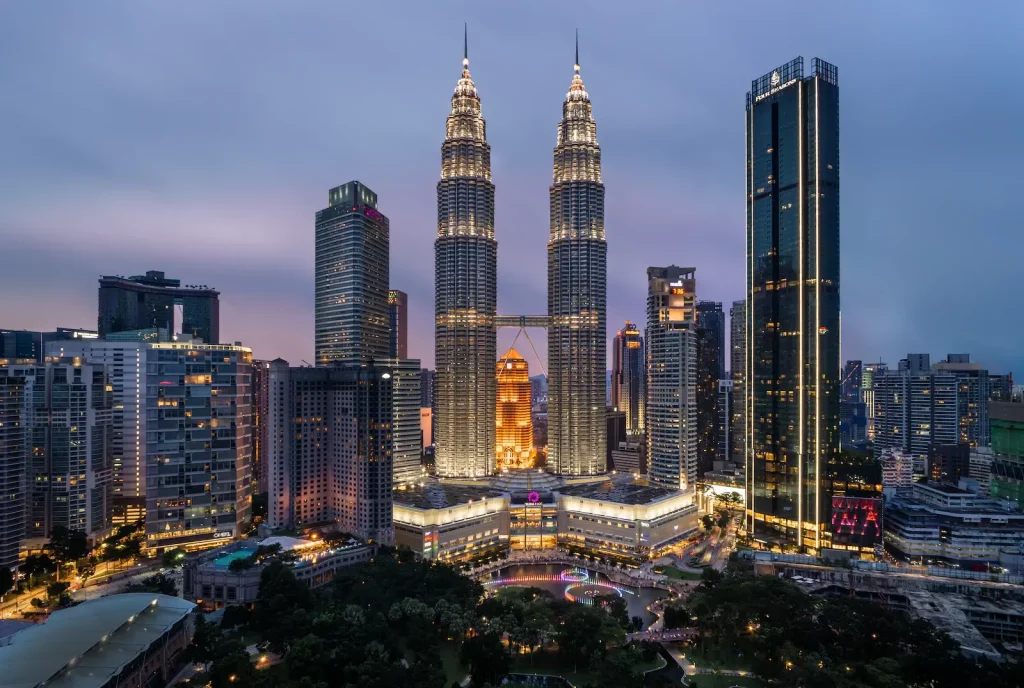
Best for: English speakers, healthcare, long-term visa stability
Base cities: Kuala Lumpur, Penang, Ipoh
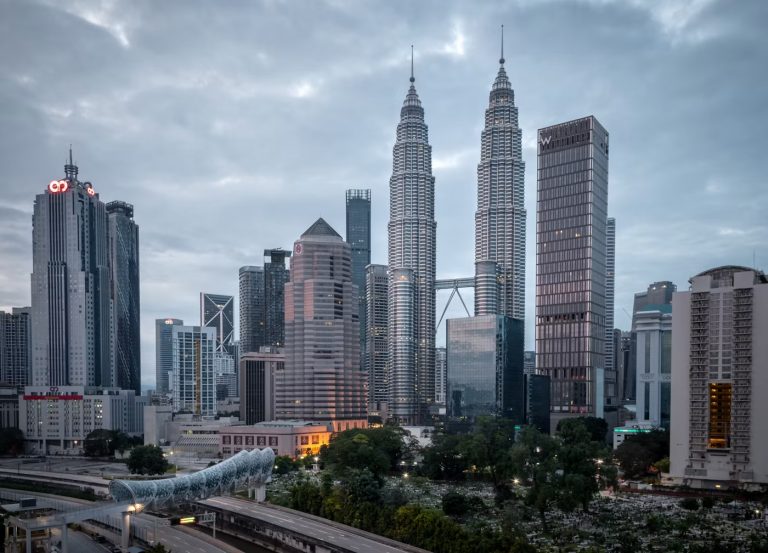
Malaysia is Southeast Asia’s most underrated retirement destination. English is genuinely spoken everywhere. The food scene — Malay, Chinese, and Indian cuisines at hawker prices — is exceptional. Private hospitals are world-class. KL’s infrastructure rivals Singapore. Better suited for an older couple looking for stability and English-language healthcare than for younger digital nomads.
Accommodation
- Budget condos (Penang suburbs, Ipoh, Johor Bahru): Older high-rises from around 1,200–1,600 MYR/month (~$270–$360).
- Modern KL high-rises (KLCC, Mont Kiara, Bangsar): Modern builds with massive infinity pools and gyms start at 2,200–3,200 MYR/month (~$500–$720). Leases are typically 1 year, though 6 months can be negotiated.
- Airbnb / Short-term luxury: High-end serviced apartments in central Kuala Lumpur run $900–$1,300/month.
Food Costs
- Local Hawker Centers / Mamak stalls (Nasi Lemak, Roti Canai): $2–$3.50 per meal.
- Air-conditioned mall restaurant / Casual dining: $5–$9 per plate.
- Western meal / International restaurant: $9–$15.
- Supermarket shopping (Jaya Grocer, Village Grocer): Excellent selection of Western imports, but alcohol and imported dairy carry a heavy tax. As a couple, expect to spend around $450/month on groceries and dining combined.
→ Full breakdown: Malaysia Cost of Living Guide
🇮🇩 Bali, Indonesia

Best for: Culture, digital nomads, wellness, scenery
Best areas: Canggu, Seminyak, Ubud, Sanur
Canggu is my personal favorite in Bali — strong expat community, good cafes, surf access. But Bali scores lowest on our comparison for reasons you need to know before committing:
- Walkability is low — motorbike or Grab for essentially everything
- Traffic is congested and dangerous — if motorbikes in heavy traffic aren’t your thing, daily life becomes a grind
- Beach quality is inconsistent — trash and plastic are a real issue on many popular beaches
Accommodation
- Local guesthouses / Kos (Ubud outskirts, Sanur): Private room with shared facilities or basic kitchen from around 5,000,000–7,500,000 IDR/month (~$320–$480).
- Modern villa / Expat complex (Canggu, Pererenan, Uluwatu): 1-bedroom private pool villa or modern complex apartment starts at 12,000,000–18,000,000 IDR/month (~$770–$1,150). Monthly rentals are common but highly competitive.
- Luxury / Premium villas: Dedicated multi-bedroom villas in prime tourist zones run $2,000–$3,500+/month.
Food Costs
- Local Warung (Nasi Campur, Mie Goreng): $2–$3.50 per plate.
- Aesthetic cafe / Western brunch spot: $6–$11 per meal.
- High-end dining / Fusion restaurants: $12–$25 per person.
- Supermarket shopping (Pepito, Grand Lucky): Western goods, imported meats, and alcohol are heavily taxed and expensive. As a couple, expect to spend around $550/month on groceries and dining combined due to the heavy cafe culture.
→ Full breakdown: Bali Cost of Living Guide
Healthcare in Southeast Asia

Healthcare is one of the top concerns for anyone retiring abroad — and one of Southeast Asia’s strongest selling points. The quality is better than most Americans expect, and the cost is a fraction of what you’d pay back home.
🇹🇭 Thailand
Thailand has the best private hospital system in the region. Bangkok’s Bumrungrad International, Bangkok Hospital, and Samitivej are internationally accredited, English-speaking, and used by medical tourists from around the world. A specialist consultation runs $30–$80. Major procedures cost a fraction of US prices. If healthcare quality is a priority in your retirement decision, Thailand is the clear winner.
🇻🇳 Vietnam
Vietnam’s private hospital network has improved significantly. In Da Nang, Family Medical Practice handles expat care well — English-speaking, modern facilities, reasonable costs. We’ve had hospital visits during our stays and been satisfied with the quality and pricing. A basic clinic visit runs $20–$50 at a private facility. For serious conditions, many expats fly to Bangkok.
🇲🇾 Malaysia
Malaysia has the most accessible private healthcare system in the region for English speakers. Gleneagles, Pantai, and KPJ hospitals are internationally recognized, and KL has a growing medical tourism industry. Healthcare quality combined with the MM2H long-term visa makes Malaysia a strong choice for retirees who prioritize medical access.
🇮🇩 Bali
Healthcare in Bali is adequate for routine care but limited for anything serious. BIMC Hospital Kuta is the main expat-facing facility and handles emergencies and basic care. For anything complex, most expats fly to Bangkok or Singapore. Factor this into your decision if you have ongoing medical needs.
Travel Insurance vs International Health Insurance
Most expats start with travel health insurance — monthly plans like Genki or SafetyWing that cover you across the region with no long-term commitment. Pricing varies by age, destination, and coverage level — compare plans rather than going on a fixed monthly number.
Once you’re settled long-term in one country, upgrading to a dedicated international health insurance plan (Cigna Global, Allianz Care, AXA) gives you better coverage limits, access to a wider hospital network, and better chronic condition coverage. These run $150–$400/month depending on age and coverage but give you true healthcare security abroad.
💡 Don’t arrive without coverage. Even at Southeast Asia’s affordable prices, a serious emergency without insurance can cost tens of thousands of dollars. See my full comparison of travel health insurance options for expats — including SafetyWing and Genki — to find the right plan for your situation.
Taxes Americans Need to Understand

Taxes are one of the most searched and least clearly answered topics in the expat retirement space. Here’s the honest overview — but always consult a qualified tax professional before making decisions based on your specific situation.
A reliable U.S. virtual mailbox makes it easy to receive and manage important documents from the Social Security Administration, the IRS, pension providers, banks, and other financial institutions while you’re living overseas.
US Taxes — You Still File
The US taxes based on citizenship, not residency. This means you must file a US tax return every year regardless of where you live. Moving to Thailand or Vietnam does not eliminate your US tax obligation. What it may do is reduce how much you owe through exclusions and credits.
Foreign Earned Income Exclusion (FEIE)
If you’re still earning income from work while living abroad — remote work, freelancing, consulting — the FEIE lets you exclude a significant amount of foreign-earned income from US taxation (adjusted annually). You must pass either the Physical Presence Test (330 days outside the US) or the Bona Fide Residence Test. This does not apply to passive income like Social Security, pensions, investment returns, or rental income.
Social Security
Social Security benefits can generally be paid while you live abroad, and up to 85% of your benefits may still be taxable depending on your total income. The good news is that annual Social Security cost-of-living adjustments (COLAs) help your income keep pace with inflation throughout retirement.
Medicare
Medicare is different. In most cases, it doesn’t cover healthcare outside the United States, so you’ll need local or international health insurance. While many retirees keep premium-free Medicare Part A, the decision to keep paying for Part B deserves careful consideration since dropping it could result in higher premiums or enrollment delays if you later return to the U.S. for care.
🇹🇭 Thai Tax Residency
⚠️ Stay in Thailand 180 or more days in a calendar year and you become a Thai tax resident. Thailand recently updated its rules to require tax residents to declare income brought into Thailand — including foreign pensions, investment withdrawals, and potentially Social Security. This is a significant development that many older expat guides don’t address. Speak with a tax professional who specializes in US-Thai tax matters before committing to 180+ days annually.
🇻🇳 Vietnam
Vietnam taxes residency similarly — 183+ days and you may be considered a tax resident. In practice, most expats operating on 90-day e-visa rotations don’t trigger this threshold. But as Vietnam formalizes its expat population rules, this is worth watching.
🇲🇾 Malaysia
Malaysia has historically not taxed foreign-sourced income, making it attractive for retirees living on overseas pensions and investments. MM2H holders have typically been exempt from Malaysian income tax on foreign income. Verify current rules as Malaysia has been updating its tax framework.
💡 Bottom line on taxes: Retiring abroad doesn’t eliminate your US tax obligation — it changes it. The specifics depend on your income sources, how long you stay in each country, and which tax treaties apply. This is an area where paying for professional advice upfront saves significant money and headaches later.
Can You Retire in Southeast Asia on Social Security?
The average Social Security benefit in 2026 is around $1,900–$2,000/month for a retired worker. Here’s how that maps to life in Southeast Asia:
- COLA adjustments matter a lot over a 20-year retirement in a region where prices are rising
- US Social Security is paid regardless of where you live — no restrictions for Thailand, Vietnam, Malaysia, or Indonesia
- Supplement with savings — even if SS covers monthly costs, a $30,000–$50,000 cash reserve covers emergencies, flights, and visa costs
- Couples get far more mileage — two SS recipients combining $3,500–$4,000/month can live very well across the entire region
Visa Strategy: The Most Important Decision You’ll Make
Your visa determines everything — how long you can legally stay, and how much mental energy you spend managing residency rather than living your life. Figure this out before you book a flight.
⚠️ Border runs are increasingly frowned upon across most of Southeast Asia. Doing endless tourist entries was tolerated for years but Thailand immigration now scrutinizes frequent re-entries. Vietnam is currently the exception — but don’t build a permanent retirement plan around something that can change without notice.
🇹🇭 Thailand
- Retirees (Age 50+): Non-Immigrant OA Visa. Requires 800,000 THB (~$24,500) in a Thai bank account or a verified 65,000 THB/month income. Valid for 1 year and renewable annually. This is the clearest long-term residency path in the region.
- Under Age 50:
- Tourist Visa: 30 days on arrival, extendable to 60 days.
- DTV Visa (Launched 2024): Valid for 5 years, costs ~$80, allows 180 days per entry. Requires proof of $15,000 in savings.
- ED Visa: 90 days renewable by registering with a certified Thai language or culture school.
🇻🇳 Vietnam
- 90-Day E-Visa: Costs $25 per person. You must exit the country, reapply, and return upon approval. No official retirement visa category exists. While the government has tolerated long-term stayers using this loop for years, it remains informal and subject to change.
🇲🇾 Malaysia
- Tourist Access: 90 days visa-free for US citizens.
- MM2H Silver (Long-Term): Provides 5-year residency but requires a ~$32,000 fixed asset deposit and a mandatory property purchase.
- Sarawak S-MM2H: A popular regional alternative with significantly lower financial asset thresholds and no mandatory property investment requirement.
🇮🇩 Bali, Indonesia
- B211A Social Visit Visa: Gives you 60 days initially, extendable up to a total of 6 months. Staying beyond this window requires a full border exit or transition into a formal KITAS retirement visa structure.
My Current Strategy: Slow Travel on Tourist Visas
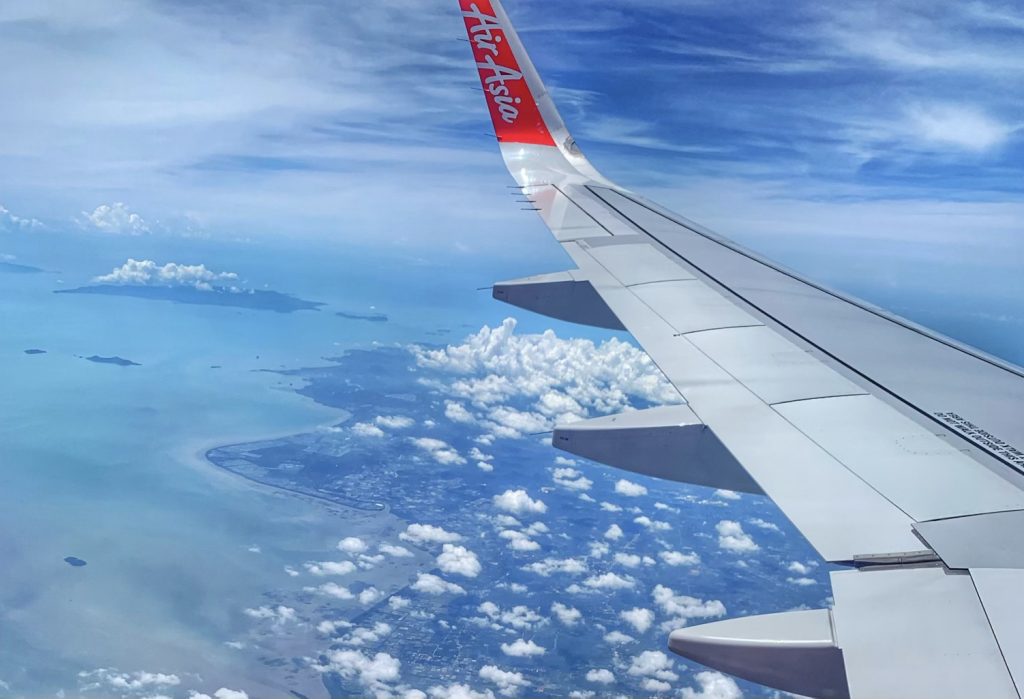
I’m currently 47 — the Thailand retirement visa isn’t available yet. And given Thailand’s 180-day tax residency threshold and Vietnam’s 90-day e-visa limit, I’ve settled into a strategy that works: slow travel, staying the maximum tourist allowance in each country before moving on.
This works because I travel light. One bag, 7kg, carry-on only. No checked luggage, no fees, no waiting at carousels. When it’s time to move, I move. See my one-bag travel gear guide for exactly what I carry year-round across Southeast Asia.
Budget Breakdown by Lifestyle
Final Thoughts
Don’t chase the absolute cheapest place to live. Instead, build a lifestyle you can comfortably afford for years to come—one that gives you freedom, stability, and room to enjoy where you live instead of constantly worrying about your budget.
After four years of living in Asia, I’ve found that around $3,000 per month gives most Americans the flexibility to live well without watching every dollar. Whether you choose Thailand, Vietnam, Malaysia, or Bali, taking the time to understand visa requirements, tax obligations, healthcare, and the true local cost of living before you move will make your transition far smoother.
If you’re still deciding where to live, start with our guide to the best places to live in Asia for American expats, where we compare the region’s top destinations city by city. When you’re ready to plan your move, these resources will help you get everything in order:
- Moving Abroad Checklist
- International Travel Insurance Guide
- Hotel Rewards Strategy
- Best Travel Credit Cards
A little planning upfront can save you thousands of dollars—and countless headaches—once you’re abroad.
How much money do you need to retire in Southeast Asia in 2026?
Most retirees should budget $2,500–$3,000 per month for a comfortable lifestyle in 2026. While it’s possible to get by on $2,000/month in Vietnam, having $3,000/month provides real flexibility for healthcare, regional travel, inflation, and unexpected expenses. Based on the 4.5% rule, that means roughly $660,000–$800,000 saved — or a combination of savings and reliable income like Social Security.
How much do you need saved to retire abroad in Southeast Asia?
Using the 4.5% safe withdrawal rule: $2,000/month requires roughly $533,333 saved; $2,500/month requires $666,667; $3,000/month requires $800,000. If you have Social Security, a pension, or other reliable income supplementing your savings, you don’t necessarily need the full portfolio amount.
Can Americans retire in Southeast Asia on Social Security?
Yes, if your benefit is $1,500/month or more. Vietnam cities like Da Nang and Nha Trang or Thai cities like Hua Hin and Chiang Mai are the most accessible on a standard Social Security income. At $2,000+/month you have comfortable options across the whole region. Social Security is paid regardless of where you live and annual COLA adjustments help keep pace with regional inflation over time.
Do I still pay US taxes if I retire abroad?
Yes. The US taxes based on citizenship, not residency, so you must file a US return every year regardless of where you live. If you’re still earning foreign income from work, the Foreign Earned Income Exclusion (FEIE) may reduce what you owe. Social Security may be taxable depending on your total income. Additionally, staying 180+ days in Thailand may trigger Thai tax residency requirements. Consult a tax professional who specializes in US expat taxes before making decisions.
What is the cheapest country to retire in Southeast Asia?
Vietnam — particularly Da Nang and Nha Trang — offers the best value in the region. A single person can live comfortably for $1,000–$1,500/month. The tradeoff is there’s no formal retirement visa: you operate on a 90-day e-visa system, exiting and reapplying each time.
How have costs changed in Southeast Asia in recent years?
Significantly. The Airbnb I paid $600/month for in Bangkok’s Sukhumvit area four years ago now costs $1,200. Decent hotels went from $20–$30 a night to $40–$50. Overtouristed spots like Koh Samui and Phuket have jumped in price enough that we’ve stopped visiting regularly. Anyone planning a retirement budget should build in a 20–30% inflation buffer over five years rather than locking in today’s figures.
Do I need health insurance to retire in Southeast Asia?
Yes. Healthcare in Southeast Asia is affordable by Western standards but without coverage a serious emergency can still cost tens of thousands of dollars. Most expats start with travel health insurance like SafetyWing Nomad or Genki Explorer — monthly plans with no long-term commitment. Once settled long-term in one country, upgrading to a dedicated international health insurance plan gives better coverage limits and access. Pricing varies by age, destination, and coverage level — compare plans before choosing.