
The dream of cruising through Bali’s rice fields or Vietnam’s coast on a scooter is a traveler’s staple. It feels like the ultimate freedom—until it isn’t. After witnessing far too many accidents and surviving a crash of my own, I’ve seen firsthand how quickly a tropical adventure can turn into a medical nightmare. Before you hand over your passport, you need to understand the hidden dangers that most rental shops won’t tell you. From insurance loopholes to chaotic road laws, here are 10 reasons why renting a motorbike in Southeast Asia is riskier than you think.
Top 10 Reasons Not To Rent A Motorbike
Should I Rent a Motorbike in SE Asia?
Contemplating whether to rent a motorbike in Thailand, Vietnam, or Bali is a decision that carries more weight than most travelers realize. While the freedom of the open road is tempting, the stark reality of road safety in Southeast Asia—which has some of the highest accident rates globally—warrants a very cautious approach. Beyond the sobering statistics, the stories of medical emergencies and legal nightmares are a reminder that you shouldn’t get behind the handlebars unless you are fully prepared for the risks. From chaotic city traffic to unpredictable rural roads, it is essential to delve into the facts and uncertainties before you rev the engine.
1. Thailand: The Deadliest Roads in Asia for Motorcyclists
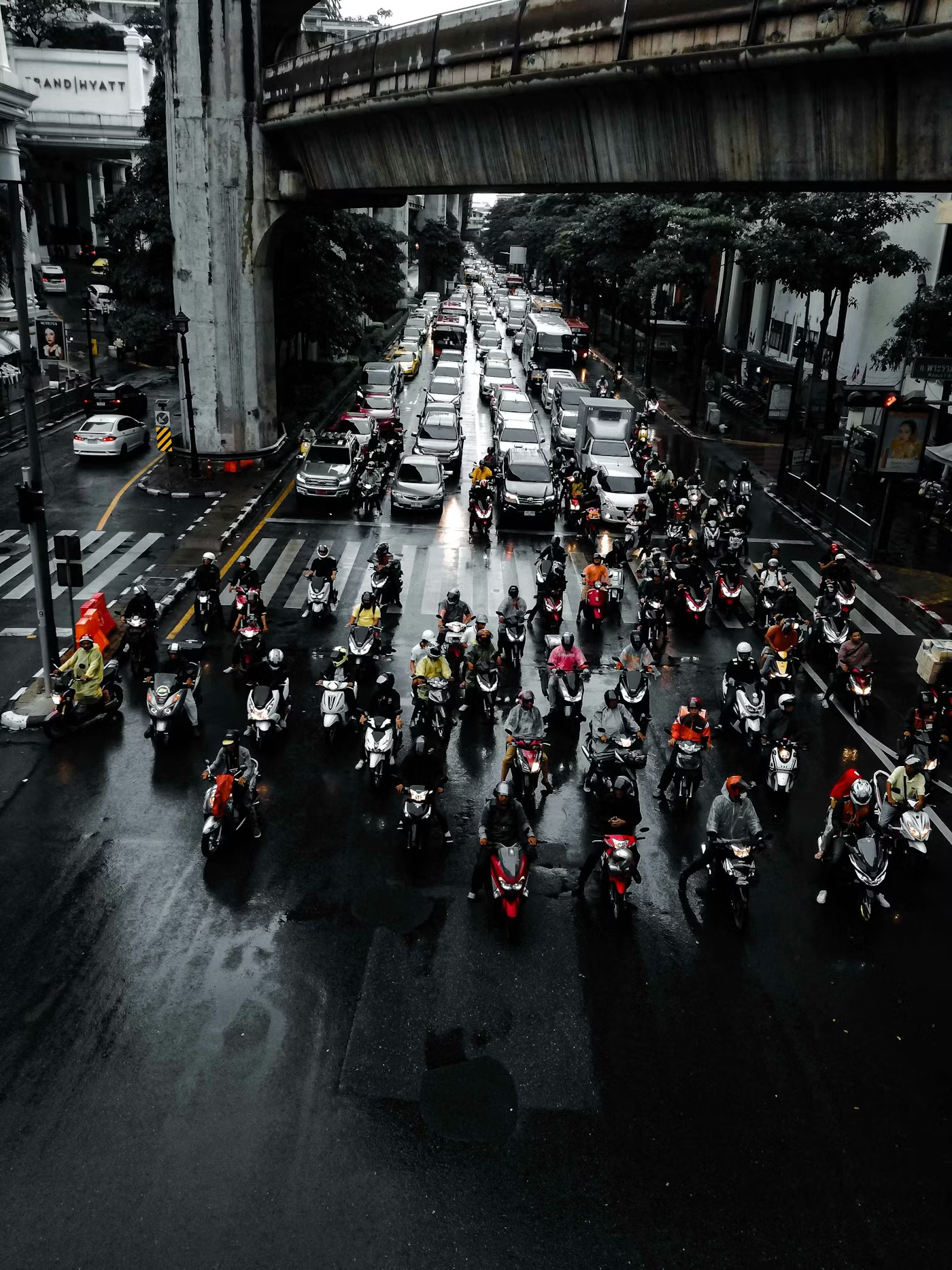
The most critical fact for travelers? Over 80% of road deaths in Thailand involve motorcycles. A quick search of local news confirms that accidents are a daily occurrence, often involving tourists who underestimate the complexity of local traffic. The danger isn’t just a “possibility”—it is a statistically significant risk. The high accident rate is driven by several factors:
• Extreme Traffic Density: Mixing high-speed cars with thousands of small scooters.
• Inconsistent Road Surfaces: Sudden potholes or loose gravel, especially on islands like Koh Samui or Phuket.
• Lack of Enforcement: Many riders ignore traffic signals, creating a “predictably unpredictable” environment for foreigners.
2. The Trap of Motorbike Scams and Hidden Costs
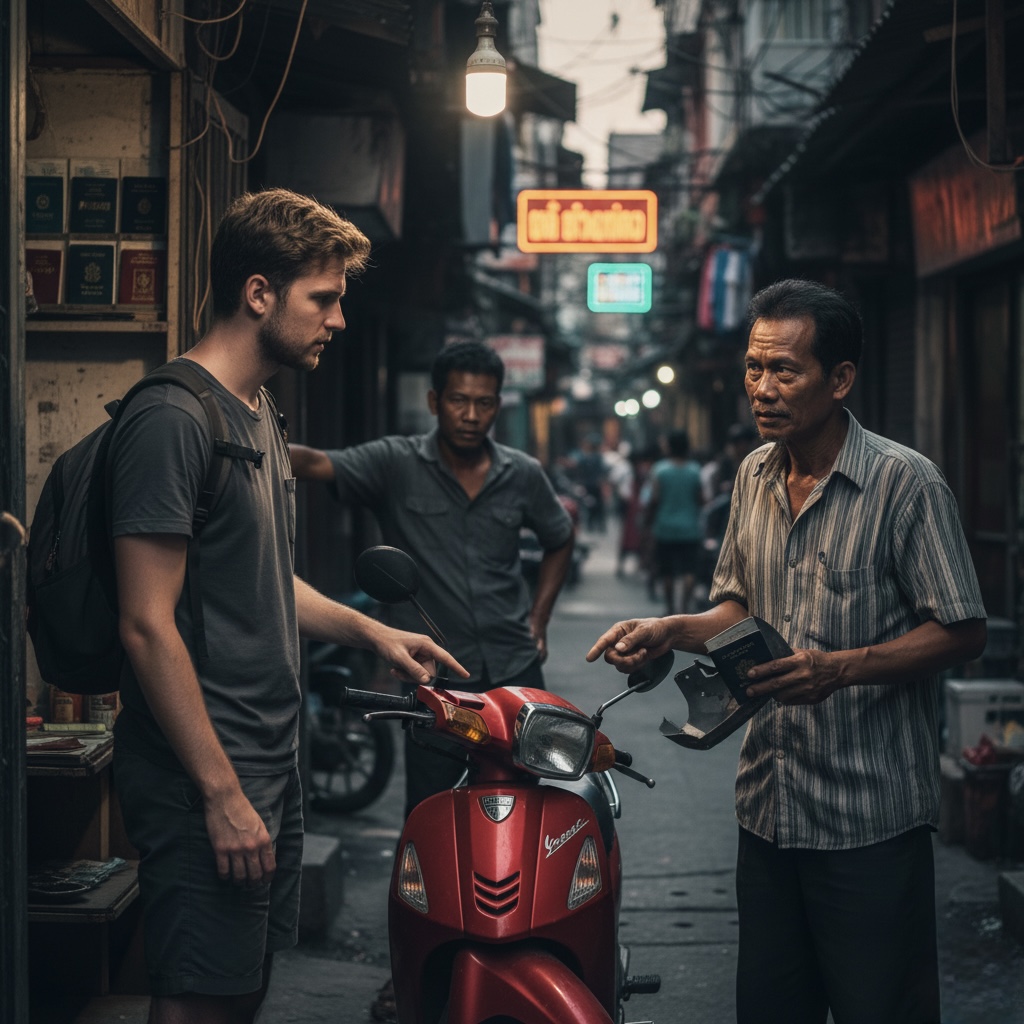
While the price tag of $5–$10 USD per day makes renting a motorbike in Southeast Asia seem like a budget-friendly dream, the “hidden” costs can quickly turn it into a nightmare. Across Thailand, Vietnam, and Bali, unethical rental shops use a variety of tactics to squeeze extra cash out of unsuspecting travelers.
• The “Pre-Existing Damage” Scam: This is the most frequent issue. Upon returning the bike, the shop points to a tiny scratch or a cracked plastic panel and insists you caused it. Without proof, they may demand $100–$300 for a repair that actually costs $10.
• The Passport Ransom: Never leave your original passport as a deposit. Many shops in Thailand and Vietnam will insist on holding it. If a dispute arises over “damage,” they have total leverage because you cannot leave the country without that document. Always offer a high-quality photocopy and a cash deposit instead.
• The “Vanishing Bike” Scheme: In rare but serious cases, a shop may use a spare key to “steal” the bike back while you are parked at a beach or mall. They then demand you pay the full replacement value of the motorcycle (often upwards of $1,500 USD).
• Hidden Fees: Watch out for “mandatory” insurance fees that don’t actually cover anything, or hefty cleaning charges for a bit of mud.
Expert Tip: Before you drive away, take a 360-degree video of the bike in front of the owner. Zoom in on the tires, the underside, and any existing scratches. A timestamped video is your best defense against “fake” damage claims.
3. Unpredictable Climate and Weather Hazards
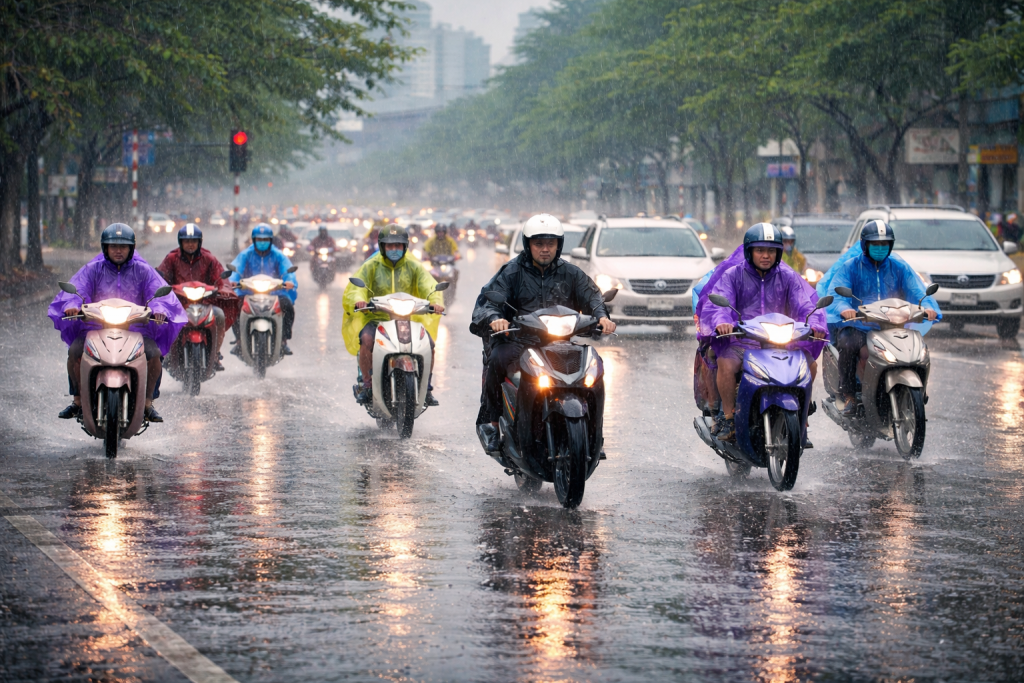
The tropical weather in Thailand, Vietnam, and Bali introduces risks that many Western riders aren’t used to. It isn’t just about getting wet; it’s about how the environment changes the road itself.
• The “First 15 Minutes” Trap: When rain first hits the dusty roads of Bali or Thailand, it mixes with leaked oil and debris to create a slick, ice-like surface. This is when most tourist wipeouts occur.
• Flash Flooding: In cities like Bangkok or Ho Chi Minh, a 20-minute downpour can turn a street into a river. These “hidden” puddles often mask deep potholes or open manhole covers that can swallow a motorbike wheel.
• Tropical Heat Fatigue: Riding in 35{°C} (95{°F}) heat with high humidity is physically draining. Dehydration leads to slower reaction times and “highway hypnosis,” which is incredibly dangerous in chaotic Asian traffic.
• Diverse Terrains: You might start your day on a paved road in a Vietnam valley and end up on a steep, muddy mountain pass with no cell service. Inexperienced riders often find themselves “stuck” when a sudden storm turns a dirt path into an impassable slide.
Educational Tip: If you see locals suddenly pulling over under a bridge when the rain starts, follow them. They aren’t just avoiding the wet—they are waiting for the dangerous oil and dust to wash off the road before continuing.
4. Motorbike Theft: The Financial Trap
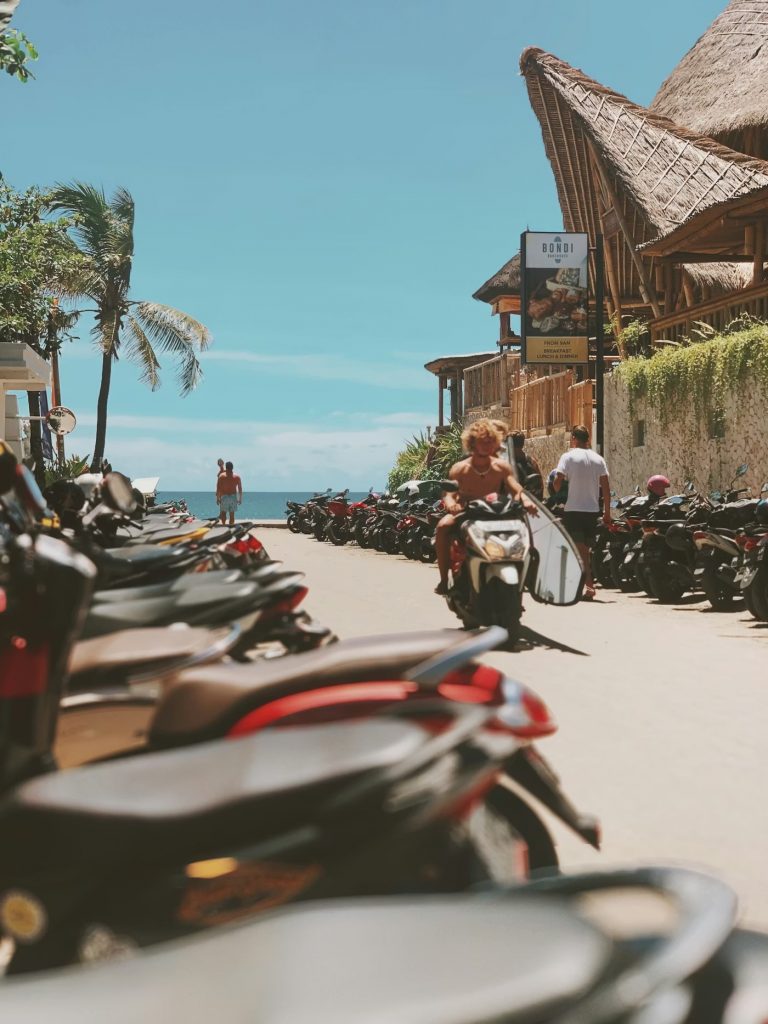
Securing a safe parking spot for your motorbike in Southeast Asia is more difficult than it looks, especially in bustling tourist hubs like Pattaya, Bali’s Seminyak, or Ho Chi Minh City. While you might feel safe in a “quiet” neighborhood, the reality is that tourists are high-value targets for organized theft rings.
• High Resale and Parts Value: Motorbikes are stolen not just for joyrides, but for profit. A stolen bike can be dismantled and sold for parts or trafficked across borders (such as from Thailand into Cambodia) within hours.
• The “Spare Key” Scam: In some cases, unscrupulous rental shops—or individuals they are in league with—will use a spare key to follow you and “steal” the bike back while you are parked at a beach or mall. They then demand you pay the full replacement cost ($1,500–$3,000+ USD) to get your passport back.
• Low Recovery Rates: As I experienced firsthand when our bike was stolen one night in a Thai neighborhood, filing a police report rarely leads to recovery. Local authorities are often overwhelmed, and without GPS tracking, these bikes vanish into thin air.
• The “Full Responsibility” Clause: Almost every rental contract in Thailand, Vietnam, and Bali states that the renter is 100% liable for the replacement of the vehicle if it is stolen—regardless of whether you locked it or parked in a “secure” spot.
Safety Fact: In 2025, police in major tourist zones like Bali and Pattaya have issued formal warnings that theft is rising. Many thieves now use “T-keys” that can break a handlebar lock in under 10 seconds.
Pro Tip: If you must rent, always look for a bike with a “shutter key” (a metal flap that covers the keyhole) and consider buying your own heavy-duty disc lock for an extra layer of security.
5. The Fatal Error: Driving Under the Influence (DUI)
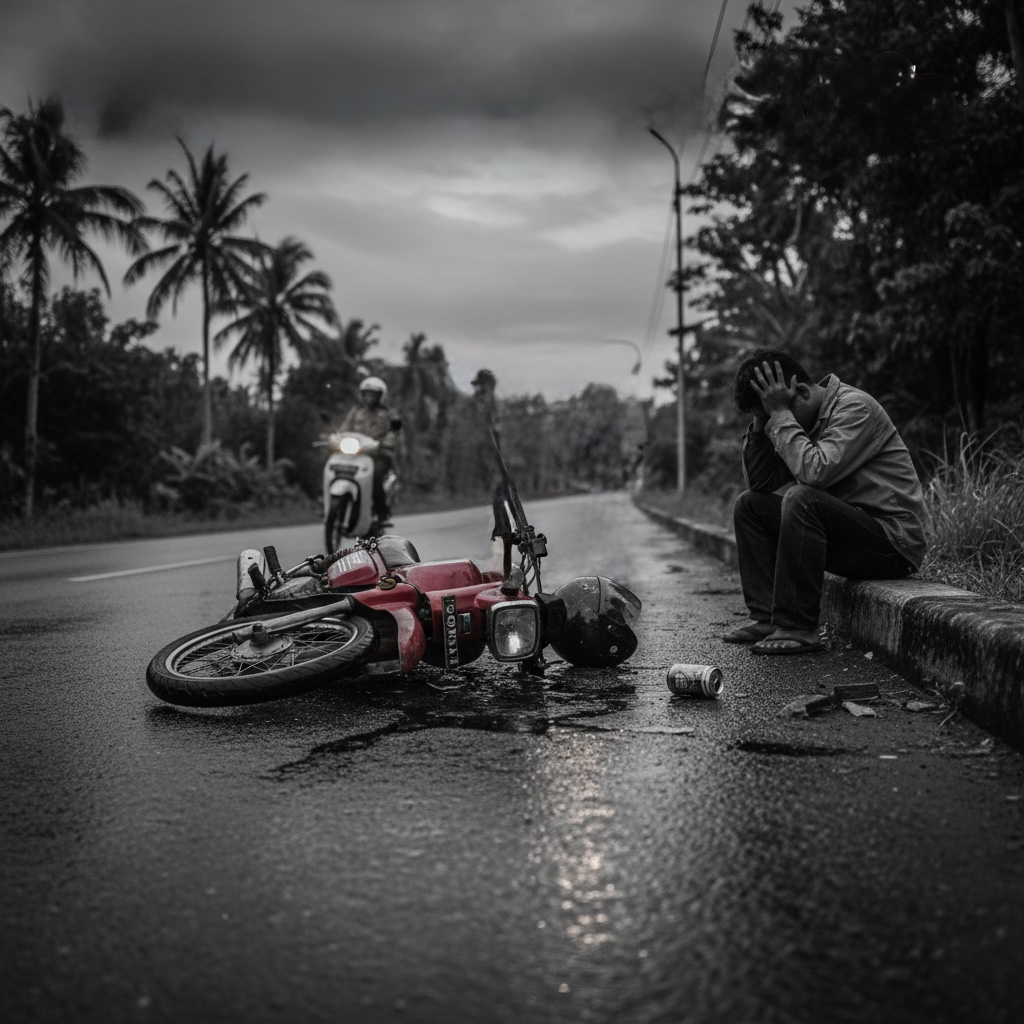
In Southeast Asia, “holiday mode” often leads to a dangerous lapse in judgment. While Thailand has long struggled with drunk driving, the risks have reached a critical point in 2026.
• The Strictest Laws in the Region: While Thailand enforces a Blood Alcohol Content (BAC) limit of 0.05%, neighboring Vietnam has recently implemented a Zero-Tolerance Policy. This means that in Vietnam, any detectable level of alcohol in your system can result in immediate vehicle impoundment and heavy fines.
• Steep Penalties: In Thailand, if you are involved in a DUI accident causing death, you face up to 10 years in prison and fines of up to 200,000 Baht. Moreover, refusal to take a breathalyzer test is now legally treated as an automatic admission of guilt.
• The Insurance Void: This is the most important financial fact: Almost every travel insurance policy is immediately voided if alcohol is involved. If you crash after even one beer, you will likely be personally responsible for 100% of your medical bills and any third-party damages, which can reach tens of thousands of dollars.
• Heightened Enforcement: Following the “Seven Dangerous Days” campaigns of recent years, police checkpoints in tourist areas like Phuket, Pattaya, and Bali’s Canggu are now more frequent, especially after 9:00 PM.
Reality Check: Alcohol remains a factor in roughly 25% of fatal accidents during peak holiday periods in Thailand. The “vibrant atmosphere” is never worth the risk of a decade in a foreign prison or a life-altering injury.
6. The “Checkpoint” Reality: Fines and Licensing Traps
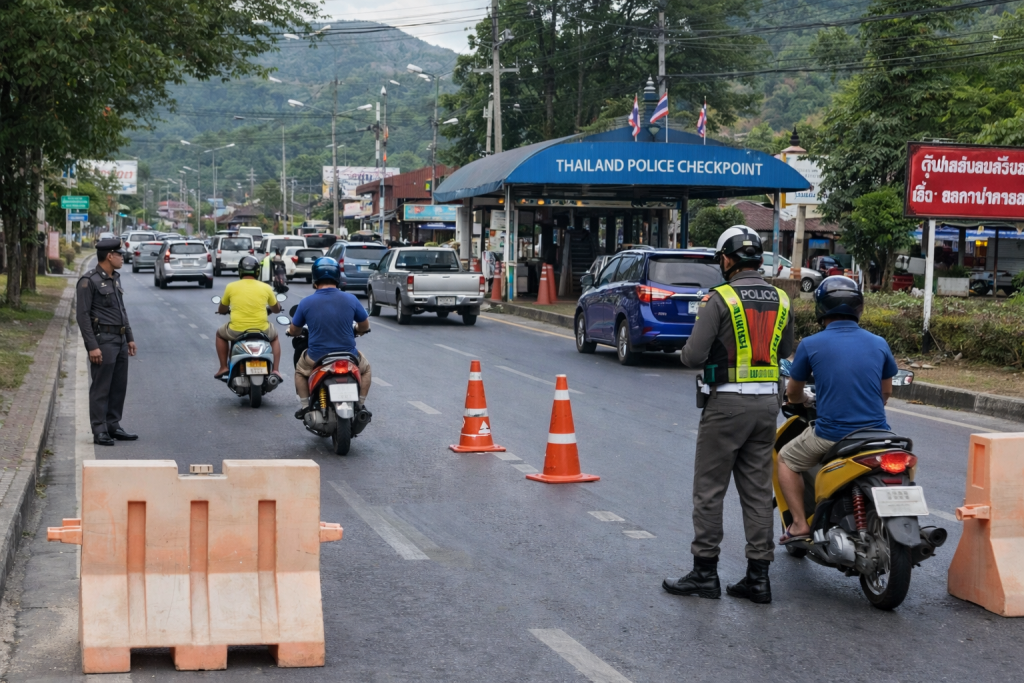
Across Thailand, Bali, and Vietnam, police checkpoints are a daily reality. While they are often framed as safety checks, they serve as a major source of revenue from unsuspecting tourists.
• The IDP Trap (Crucial): Most travelers believe their home country’s driver’s license is enough. It is not. In Thailand and Bali, you must carry your home license plus a valid International Driving Permit (IDP). In Vietnam, the laws are even stricter—your IDP must be the 1968 Convention format, or you are technically riding illegally.
• Bike-Size Fines: In 2026, Vietnam and Thailand have tiered fines based on engine size. If you are riding a bike over 125cc (like a Honda PCX or Yamaha NMAX) without a specific motorcycle endorsement on your license, fines are significantly higher, and your bike can be impounded for up to 7 days.
• Helmet Enforcement: This is the most common reason for being pulled over. Even if you see locals without helmets, tourists are “low-hanging fruit.” In Bali and Thailand, expect a fine of 500–2,000 Baht (approx. $15–$60 USD) on the spot.
• The Passport Requirement: Technically, Thai law requires you to carry your original passport at all times. While a high-quality photocopy or a photo on your phone is often accepted, police can legally demand the original to check for visa overstays. Failing to produce it can lead to a trip to the station and a 2,000 Baht fine.
Educational Tip: If you are stopped, stay calm and polite. Losing your temper (or “losing face”) in Southeast Asia will often double your fine. Ask for an official receipt; if they cannot provide one, you are likely participating in an “informal” fine.
7. The Chaos of “Unwritten” Road Rules
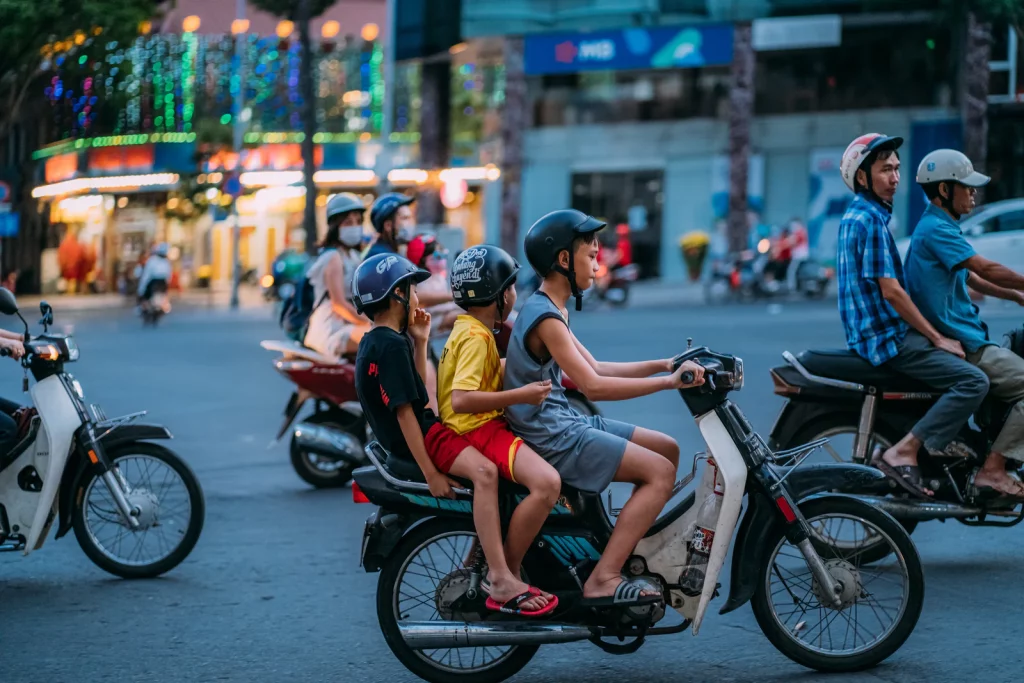
Navigating the roads in Thailand, Vietnam, and Bali feels like a high-stakes video game. The leading cause of fatal accidents involves larger vehicles cutting off motorbikes or forcing them off the shoulder. While it looks like “crazy” driving, it is actually a system based on size and momentum rather than traffic lights.
• The “Law of Might”: In Southeast Asia, the biggest vehicle usually has the right of way. If a bus or truck pulls out in front of you, they expect you to brake, regardless of who has the green light.
• The “Opposite Side” Challenge: While Thailand and Bali drive on the left, Vietnam drives on the right. Switching between these countries can cause a “muscle memory” error, especially at roundabouts or when turning onto a quiet road.
• Merging Without Looking: It is common for local drivers to pull into traffic without looking back. The philosophy is that the driver behind is responsible for avoiding the person in front.
• Creative Lane Usage: Be prepared to see motorbikes driving the “wrong way” against traffic on the shoulder or even using sidewalks to bypass a jam. In cities like Hanoi or Ho Chi Minh, the sheer density means that if you hesitate for a second, you may be swamped by hundreds of other riders.
Safety Warning: CCTV footage frequently shows car drivers overlooking motorbikes entirely when changing lanes at high speeds. Your small scooter is essentially invisible to a speeding SUV or a tired long-haul truck driver.
Pro Tip: Never assume a green light means it is safe to go. Always wait two seconds and check both ways for “late” drivers or people cutting across traffic.
8. Substandard Road Conditions and Infrastructure
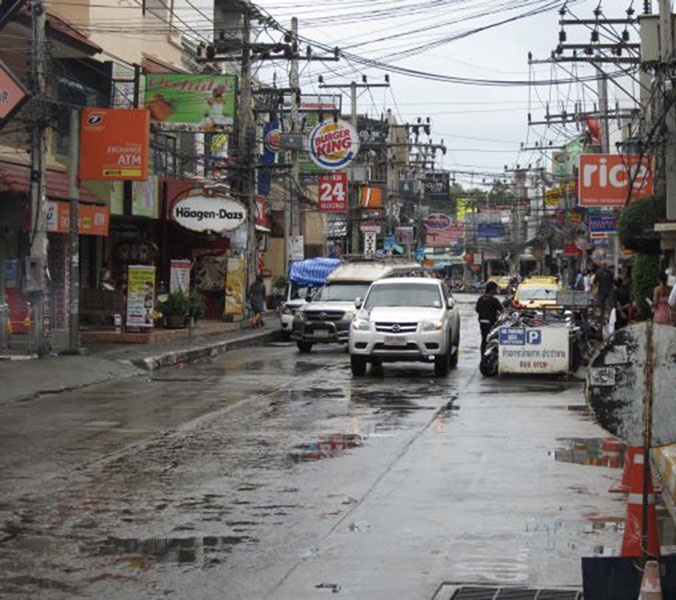
The quality of road networks in Southeast Asia is highly inconsistent. While main highways in Thailand might look modern, they are often designed for high-speed cars, leaving motorcyclists in a vulnerable position.
• The 1,000km Warning: Recent safety assessments reveal a startling statistic: nearly 75% of roads in Thailand are considered unsafe for motorcycles. This is largely due to lanes designed for automobiles where bikes are forced into “blind spots” or onto narrow, crumbling shoulders.
• The Bali “Sand Trap”: In Bali, the danger isn’t just potholes; it’s the “Bali Sand.” Loose volcanic sand and gravel frequently accumulate on the edges of winding roads in areas like Uluwatu or Ubud. For a beginner, hitting a patch of sand mid-turn is an almost guaranteed “low-side” crash.
• Vietnam’s Mountain Hazards: If you are riding the famous Ha Giang Loop or coastal roads, be prepared for sudden infrastructure failure. Heavy rains often cause landslides that leave boulders or thick mud in the middle of “blind” mountain curves.
• The “Invisible” Pothole: During the monsoon season, deep potholes are hidden by standing water. What looks like a shallow puddle in Bangkok or Ho Chi Minh City could be a 15-inch deep crater capable of snapping a bike’s suspension or throwing the rider over the handlebars.
Expert Safety Fact: In 2026, the International Road Assessment Programme (iRAP) continues to rank only 17% of Thailand’s roads as having a “3-star or better” safety rating for motorcyclists. Most “scenic” routes used by tourists are actually among the lowest rated for safety.
9. Why You Should Never Leave Your Passport or ID
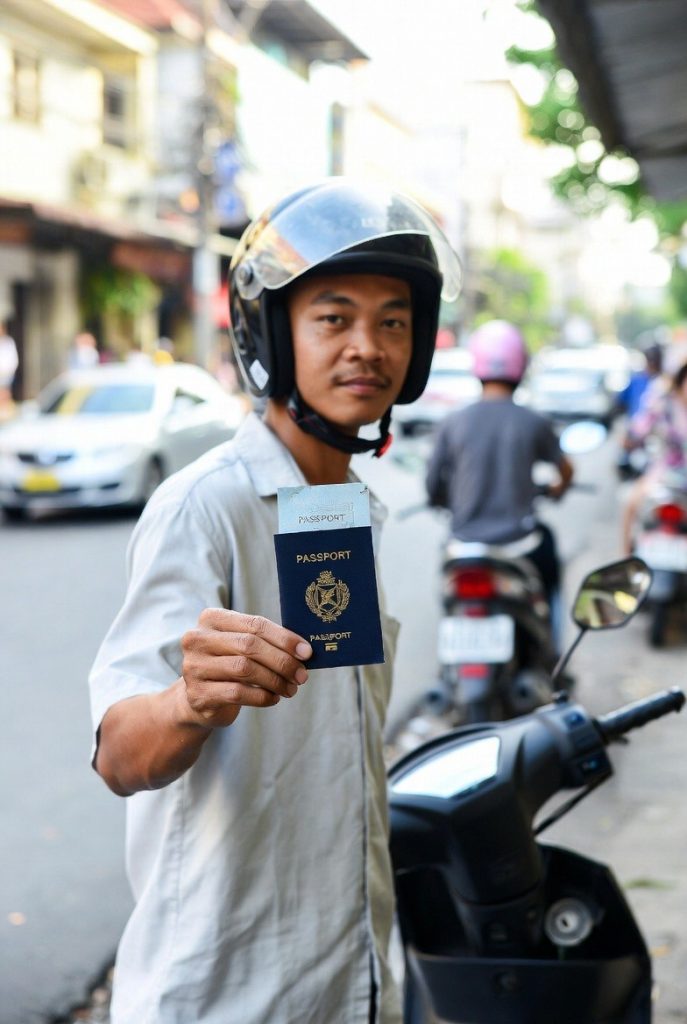
One of the most common—and dangerous—practices in Thailand, Vietnam, and Bali is the demand for your original passport as a rental deposit. While it may seem like a standard procedure, it is a significant red flag.
• Total Loss of Leverage: When a rental shop has your passport, they have total control. If there is a dispute over a scratch or a mechanical failure, you cannot simply walk away or go to the police easily. You are stuck until you pay whatever “fine” they demand to get your travel document back.
• The “Damage” Trap: Unscrupulous shops may claim you caused $500 worth of damage. Since you need your passport to catch your flight or check into your next hotel, you are often forced to pay the “ransom” just to stay on schedule.
• Identity Theft & Loss: Small rental kiosks are not secure. Passports are often kept in unlocked drawers or envelopes where they can be lost, damaged by spills, or even stolen. Replacing a lost passport at an embassy in Bangkok or Jakarta can take weeks and cost hundreds of dollars in emergency fees.
• Legal Implications: Technically, it is often illegal for a business to hold your original government-issued passport. In Vietnam and Thailand, you are legally required to be able to produce your ID if stopped by authorities.
Educational Tip: If a shop refuses to rent to you without an original passport, find another shop. Reputable businesses will accept a high-quality color photocopy along with a cash deposit (usually between 2,000 and 5,000 Baht, or roughly $100–$150 USD).
10. License & Insurance: International Driving Permit (IDP)
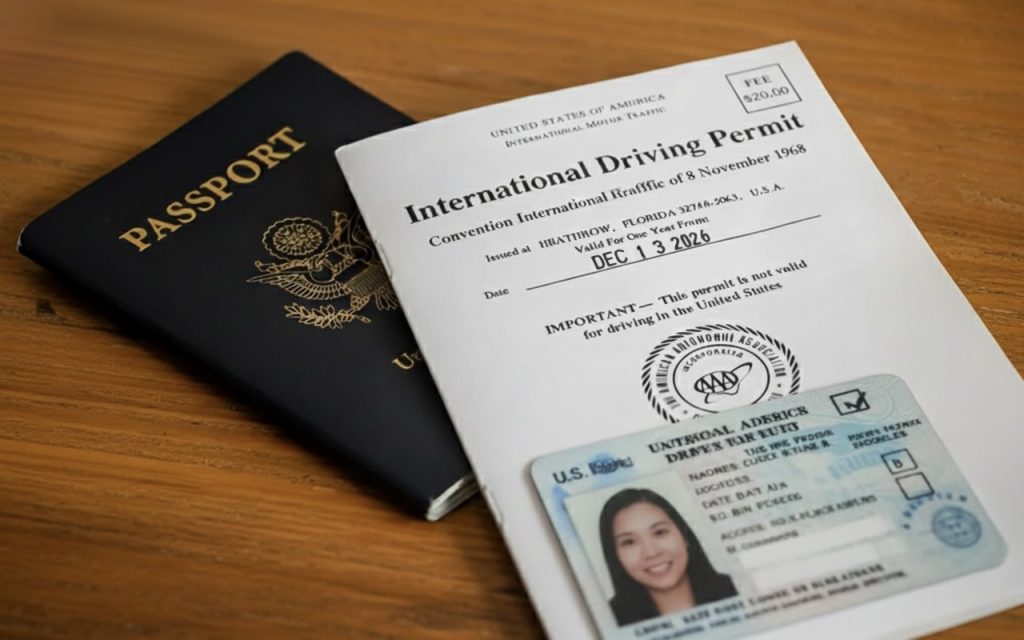
The single biggest mistake travelers make is assuming their home driver’s license is enough to ride a scooter. In Thailand, Vietnam, and Bali, the legal requirements are strict, and the consequences of ignoring them are severe.
• The IDP is Mandatory: To ride legally, you must carry your original home license and an International Driving Permit (IDP). Without both, you are technically an unlicensed driver in the eyes of the law.
• The “1968 Convention” Rule (Vietnam): If you are heading to Vietnam, check your IDP. Vietnam specifically recognizes the 1968 Vienna Convention format. If your IDP is the older 1949 version (common in the US and Australia), police may still fine you, and your insurance might be void.
• The “Motorcycle Endorsement” Reality: This is where most people get caught. If your home license only allows you to drive a car, an IDP does not magically give you a motorcycle license. You must have a motorcycle “stamp” or endorsement on your home license for the IDP to be valid for scooters.
• The 125cc Limit: In 2026, many insurance policies and local laws (especially in Vietnam) have introduced stricter tiers. If you rent a bike over 125cc (like a Honda PCX or Yamaha NMAX) but only have a basic motorcycle license, you are once again “unlicensed.”
• The “Insurance Ghost”: This is the most important “educational” fact for your readers: If you do not have the correct license and IDP, your travel insurance is likely void. If you have an accident, the insurance company will check your paperwork first. If it’s not perfect, they can legally refuse to pay for your medical evacuation or surgery.
Expert Advice: Don’t risk a lifetime of debt for a $10-a-day rental. If you aren’t fully licensed for motorbikes in your home country, do not rent one in Southeast Asia. The “fun” of the ride isn’t worth the risk of being uninsured in a foreign hospital.
Personal Story: The Crash That Changed My Perspective

I was living in Koh Samui for a month, riding a bike every single day without a single issue. I grew up with motorbikes; I was an experienced rider. But in 2019, my luck ran out.
I was riding cautiously, approaching a stop sign at a low speed, when the world suddenly went black. I woke up on the ground. There was no car, no other bike—just a patch of loose sand and gravel on the road that had caused my bike to slide out from under me the moment I touched the brakes.
My thumb took the full force of the impact, fracturing in half. What followed was a nightmare: a night in a Thai ER, multiple hospital visits for IV antibiotics to stave off infection, and eventually, six months of painful physical therapy back home just to learn how to bend my thumb again. I only gained back 75% of my mobility.
The most sobering part? I wasn’t alone. Everywhere you look in Thailand, you see the ‘Thai Tattoo’—tourists and locals alike covered in bandages. I even lost a local friend to a fatal accident, leaving behind two young boys. If an experienced local and a seasoned rider like myself can be taken down by a simple patch of sand, is the ‘freedom’ of a rental really worth the risk?”
The SafetyWing Reality Check
I now use SafetyWing for my travels, but it’s important to know their ‘fine print.’ While they do cover motorbike accidents, your claim will likely be denied if you aren’t riding legally. In Thailand, Vietnam, and Bali, this means you must have a valid motorcycle license from your home country and an International Driving Permit (IDP). If you’re riding a 125cc scooter but only have a car license back home, you are technically ‘unlicensed,’ and your insurance won’t pay a cent for your medical bills. Don’t risk a $20,000 hospital bill for a $10 rental—check your paperwork before you ride.
Conclusion: Is the Risk Worth It?
Ultimately, prioritizing your safety over the allure of a cheap rental is the smartest travel decision you can make. While motorbikes offer a sense of freedom, the risks—ranging from life-altering accidents to insurance loopholes and rental scams—often outweigh the benefits. Instead of burdening your vacation with the stress of navigating chaotic traffic and potential hospital visits, opt for hassle-free alternatives like Grab, the Metro, or local private drivers. By choosing these safer options, you ensure that your journey through Thailand, Vietnam, and Bali remains a beautiful adventure rather than a cautionary tale. Your safety is not just a priority; it is the foundation of a truly enjoyable vacation.
Can I rent a motorbike without a license in Thailand?
Technically, you need a valid motorcycle license to rent and ride a motorbike in Thailand legally. While some rental agencies may not strictly enforce this requirement, it is always better to have the appropriate license to avoid legal issues.
What is the average cost of renting a motorbike in Thailand?
Motorbike rental costs vary depending on the region and type of motorbike. On average, daily rentals can range from 200 to 400 Thai Baht.
Are there any areas in Thailand where renting a motorbike is safer?
While some areas in Thailand have more relaxed traffic conditions, safety risks still exist throughout the country. If you choose to rent a motorbike, it is essential to exercise caution and awareness at all times.
What are the best alternative transportation options in Thailand?
Don’t rent a motorbike in Thailand because it boasts an excellent transportation network, with buses, tuk-tuks, and taxis readily available in most tourist destinations. These options provide a safer and more comfortable way to explore the country.