
Planning a trip to the “Land of the Blue Dragon” but feeling unsure about tipping in Vietnam? While the country doesn’t have a traditional tipping culture, the rapid growth of tourism in cities like Hanoi, Ho Chi Minh City, and Hoi An has made gratuities a common way to show appreciation for excellent service. Whether you’re wondering how much to tip a tour guide, navigating the tipping etiquette at luxury spas, or trying to decode the “service charge” on a restaurant bill, this Vietnam tipping guide 2026 has you covered.
Thailand Tipping Guide Etiquette
How Much To Tip In Vietnam
While Vietnam is famous for its warm hospitality, its tipping culture is unique and often misunderstood by travelers. Historically, tipping was not part of daily life due to the country’s socialist roots and a focus on standardized service. However, as international tourism has flourished in hubs like Da Nang and Hanoi, the social landscape has shifted. Today, while tipping is still not mandatory or expected in local settings, it has become a widely accepted way for travelers to show appreciation for exceptional service. It is viewed less as a transaction and more as a “heartfelt thank you”—a small gesture that can significantly impact the modest wages of service workers.
Hotels & Accommodation
When it comes to hotels and accommodation, tipping in Vietnam is much more common than in local eateries, especially in luxury resorts in Phu Quoc or boutique hotels in Hoi An. While still optional, these small gestures go a long way in acknowledging the hard work of the staff.
Tipping Housekeeping (Maids)
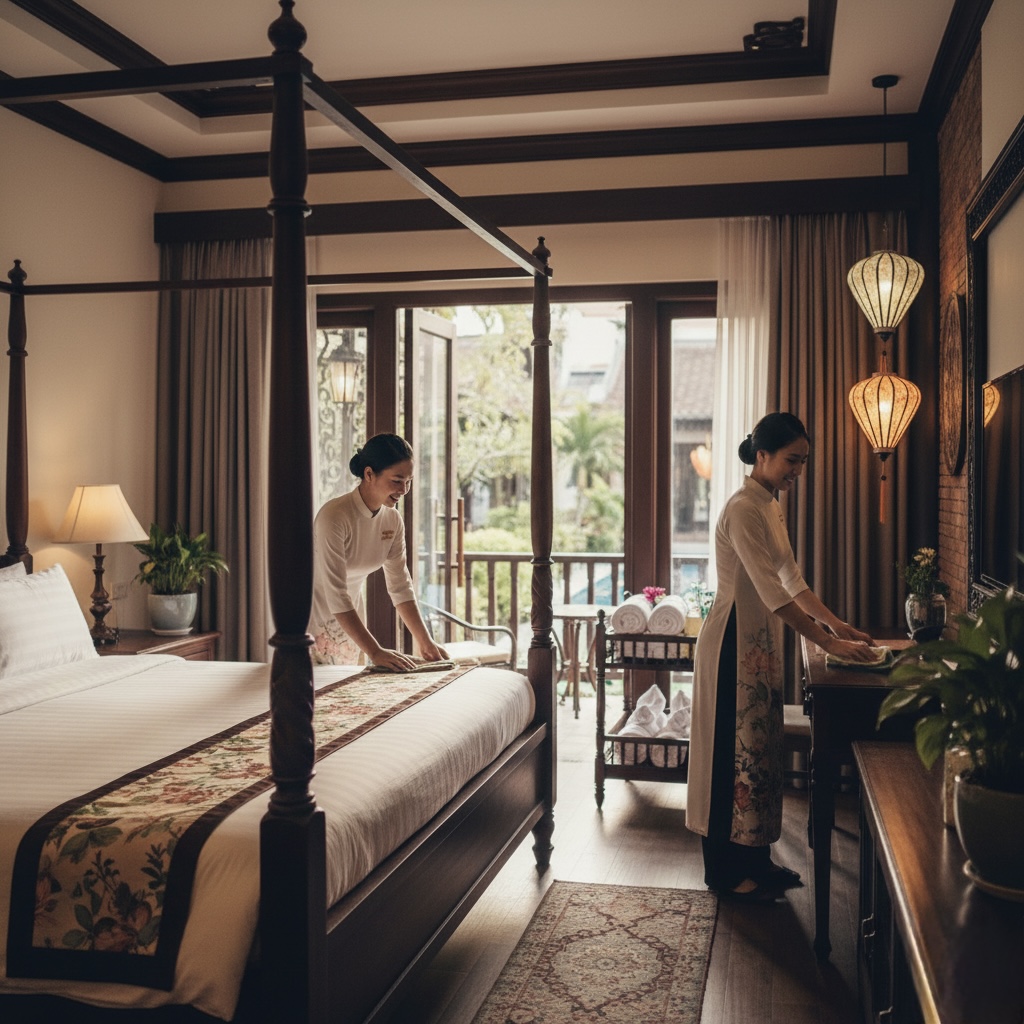
Housekeeping staff often work behind the scenes to ensure your stay is comfortable, and a small daily tip is a widely appreciated gesture.
- Suggested Amount: 20,000 to 50,000 VND ($0.80–$2.00) per day.
- Etiquette: It’s best to leave the money on the bedside table or a desk each morning. To ensure the staff knows it’s a gift and not just forgotten cash, leave it with a small note saying “Cảm ơn” (Thank you).
- Why Daily? Different staff members may clean your room each day, so tipping daily ensures the person actually doing the work receives the reward.
Tipping Service Attendants
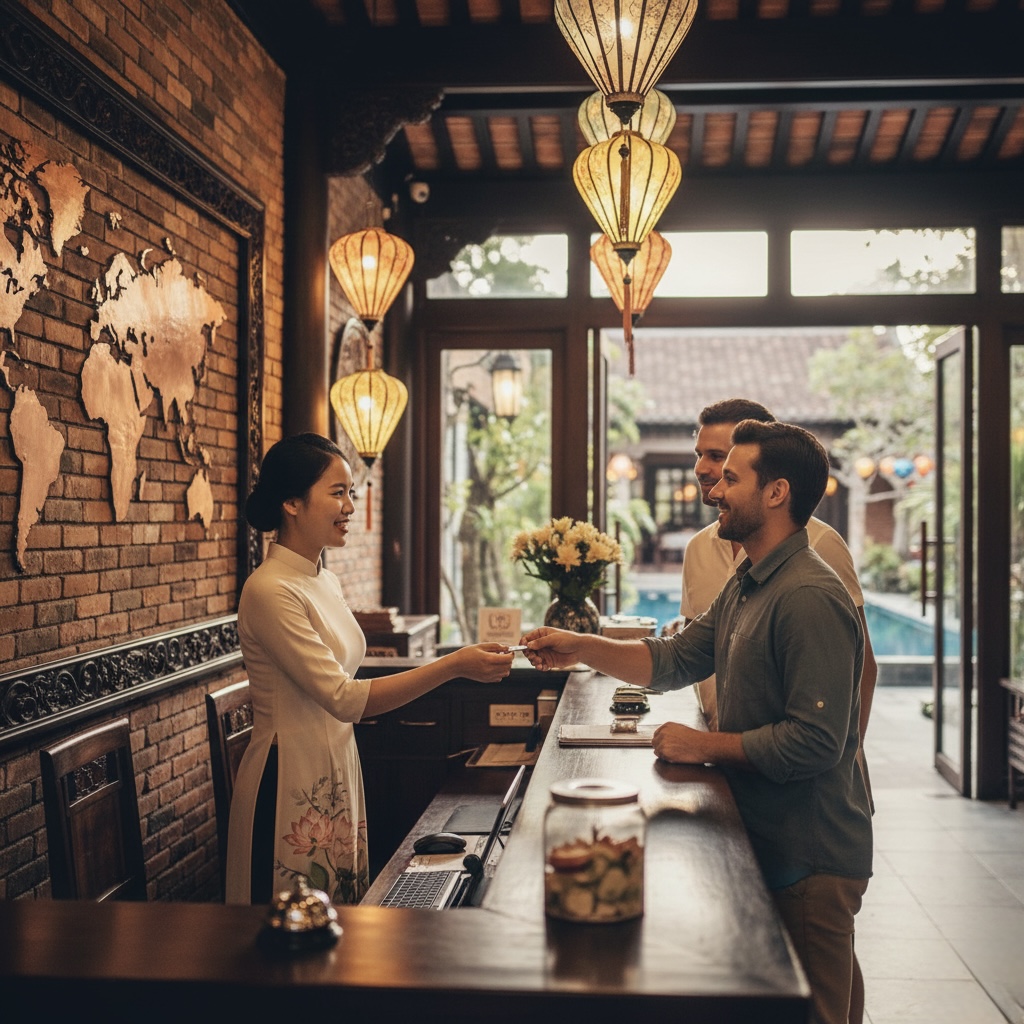
If you are staying at a mid-range or high-end hotel, the staff who handle your luggage are among the most common recipients of tips in Vietnam.
- Suggested Amount: 20,000 to 50,000 VND ($0.80–$2.00) total, or roughly 20,000 VND per bag if you have heavy luggage.
- Etiquette: Hand the cash directly to the attendant once they have delivered your bags to the room. Using both hands to offer the money is a sign of respect in Vietnamese culture and will be very well-received.
Tours & Transportation
When exploring the vibrant landscapes of Vietnam, from the bustling streets of Ho Chi Minh City to the serene waters of Ha Long Bay, your guides and drivers are the ones who make the magic happen. Here is how to handle tipping for tours and transportation in 2026.
Tipping Tour Guides

In Vietnam, tour guides often work long hours and rely on tips to supplement their modest base salaries. While not mandatory, tipping is highly customary for guided experiences.
- Private Tours: For a personalized day tour, a tip of 150,000 to 300,000 VND ($6–$12 USD) per person is standard for a job well done.
- Group Tours: If you are part of a larger group (e.g., a bus tour to the Cu Chi Tunnels), 50,000 to 100,000 VND ($2–$4 USD) per person is an appropriate gesture.
- Free Walking Tours: These guides often work for tips alone. A fair contribution is 100,000 to 150,000 VND ($4–$6 USD) per person for a 2-3 hour tour.
- The Driver: If your tour has a separate driver, it is polite to tip them about half of what you give the guide (usually 50,000 to 100,000 VND per day).
Etiquette Tip: Present the tip at the very end of the tour. Using both hands to hand over the cash is a sign of deep respect in Vietnamese culture.
Tipping Taxis and Grab

Whether you are hopping in a traditional Mai Linh taxi or using the Grab app (the Uber of Southeast Asia), tipping is generally not expected, but small gestures are common.
- Taxis: Most travelers simply round up the fare to the nearest 10,000 or 20,000 VND. For example, if the meter reads 82,000 VND, giving 90,000 or 100,000 VND and saying “keep the change” is a kind way to handle it.
- Grab Rides: Tipping is not required on the app, but you can add a small tip (10,000–20,000 VND) digitally after the ride if the driver was exceptionally helpful with luggage or navigated heavy traffic safely.
Pro Tip: In Vietnam, drivers will often go out of their way to find your exact change down to the last 1,000 VND. If you intend to tip by “rounding up,” be sure to tell them early so they don’t spend time digging for small notes!
Parking Attendants (The “Keeping the Bike” Fee)
If you rent a motorbike (very common in Vietnam), they will encounter parking attendants everywhere.
• The Nuance: This isn’t exactly a tip, but a mandatory fee.
• The Amount: Usually 5,000 to 10,000 VND. Always ask for a small paper ticket—this is your receipt to get your bike back!
Klook.comRestaurants & Dining
When dining out in Vietnam, the rules change depending on whether you’re sitting on a plastic stool on a sidewalk or dining in a colonial-style villa in District 1. Here is how to navigate the nuances of the check.
Tipping in Restaurants
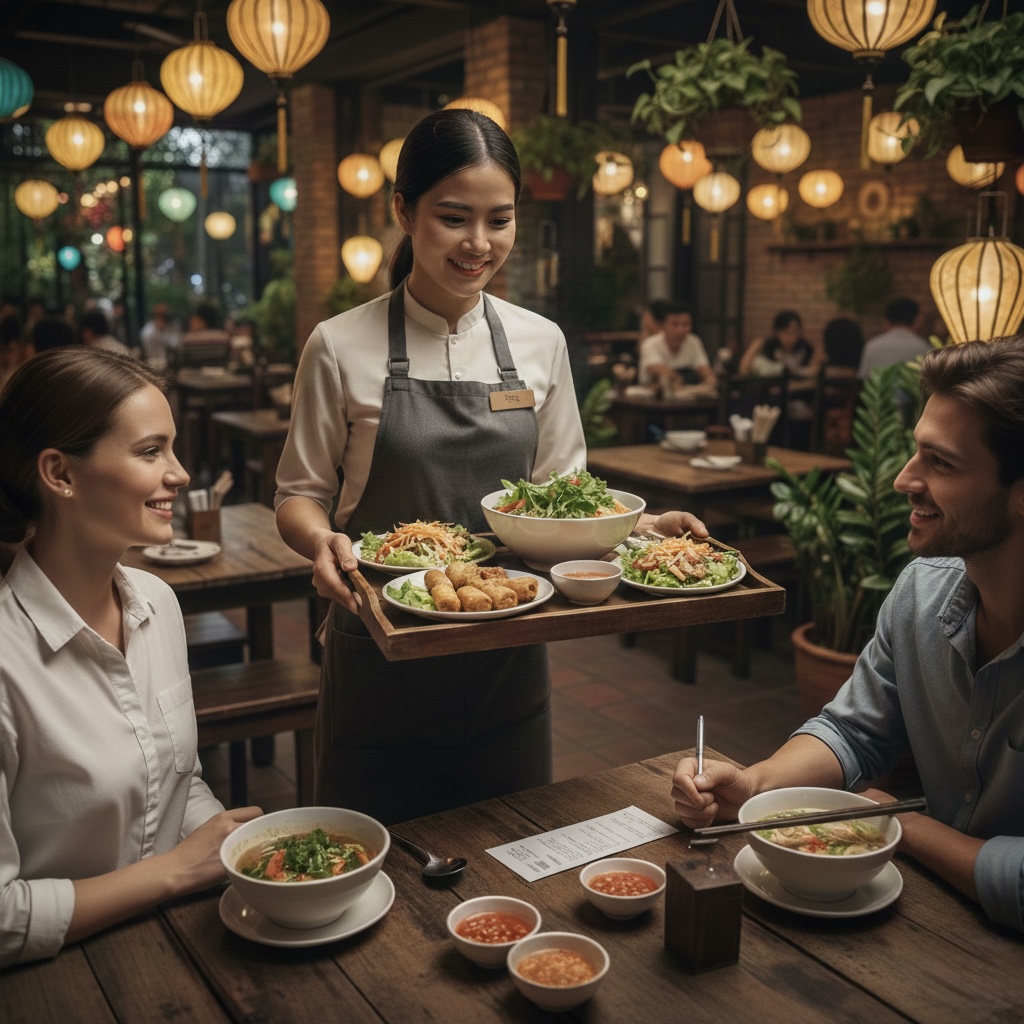
In Vietnam, the “rules” of the table are simple: the more local the spot, the less a tip is expected.
- Street Food & Local Eateries: Tipping is not expected and can even cause confusion. If your Banh Mi costs 25,000 VND, just pay the 25,000.
- Mid-Range Restaurants: In seated cafes or casual restaurants, tipping is still not mandatory, but rounding up the bill or leaving the “small change” (the 10,000 or 20,000 VND notes) is a common and polite gesture.
- Fine Dining & Upscale Venues: Many high-end restaurants in Saigon or Hanoi will add a 5% to 10% Service Charge (often listed as ‘SC’ on the bill) plus 8% to 10% VAT.
• If Service Charge is included: No further tip is necessary.
• If NOT included: A tip of 5% to 10% of the total bill is appropriate for good service. - The Nuance: Much like in Thailand, you will usually need to catch the server’s eye and signal for the bill (“Em ơi, tính tiền”). They will not bring it until you ask, as they don’t want to rush your experience.
Tipping at the Bar
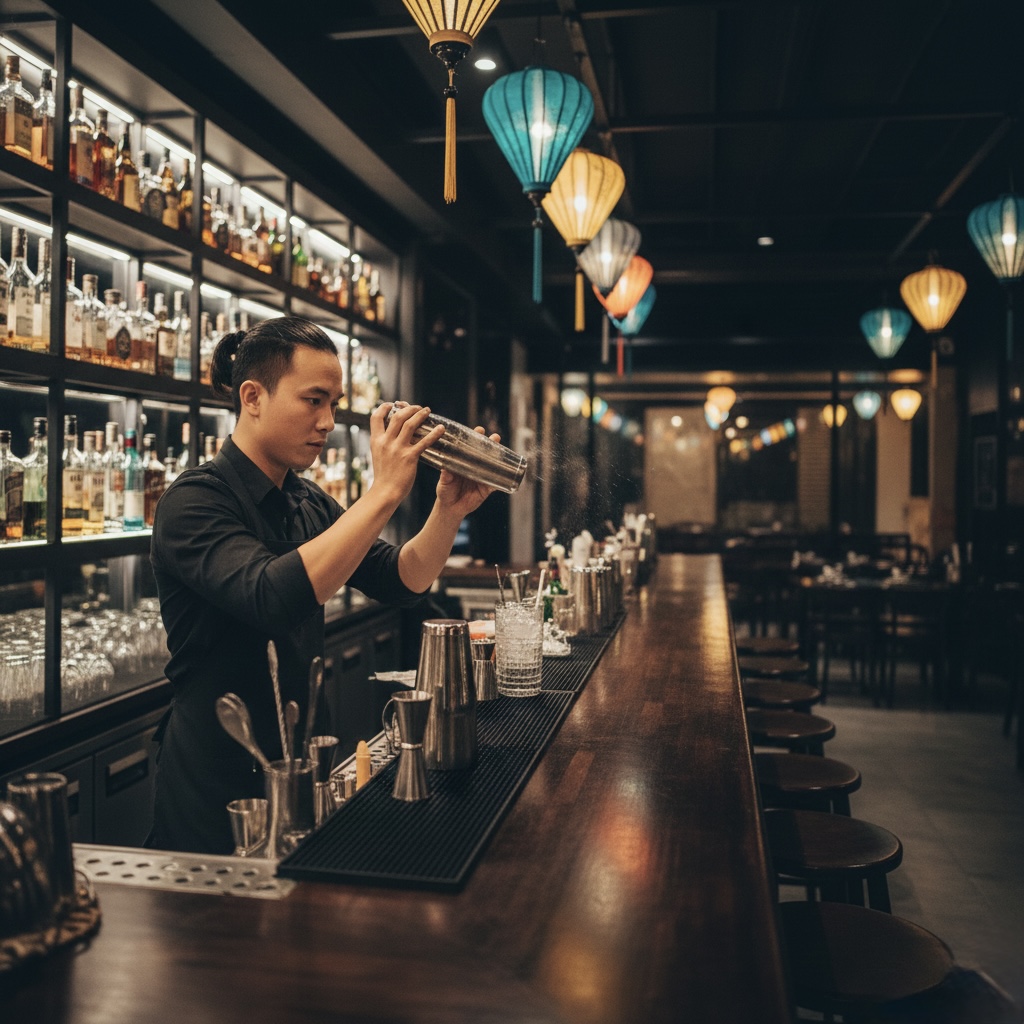
The bar scene in Vietnam ranges from “Bia Hoi” (fresh beer) corners to sophisticated rooftop mixology bars.
- Bia Hoi & Local Pubs: No tip is expected. You pay for your rounds as you go or at the end.
- Cocktail Bars & Nightclubs: If you are sitting at the bar and the bartender is crafting complex drinks, a tip of 20,000 to 50,000 VND per round (or at the end of the night) is a great way to show appreciation.
- Bottle Service: If you are at a high-end club with a dedicated server for your table, a tip of 100,000 to 200,000 VND ($4–$8 USD) at the end of the night is standard for the group to leave.
Money Tip: Vietnamese currency can be confusing because of all the zeros. 100,000 VND is roughly $4.00 USD. Always double-check your notes—the green 10,000 VND and the blue 500,000 VND can look similar in dim bar lighting!
Tipping for Food Delivery Apps in Vietnam
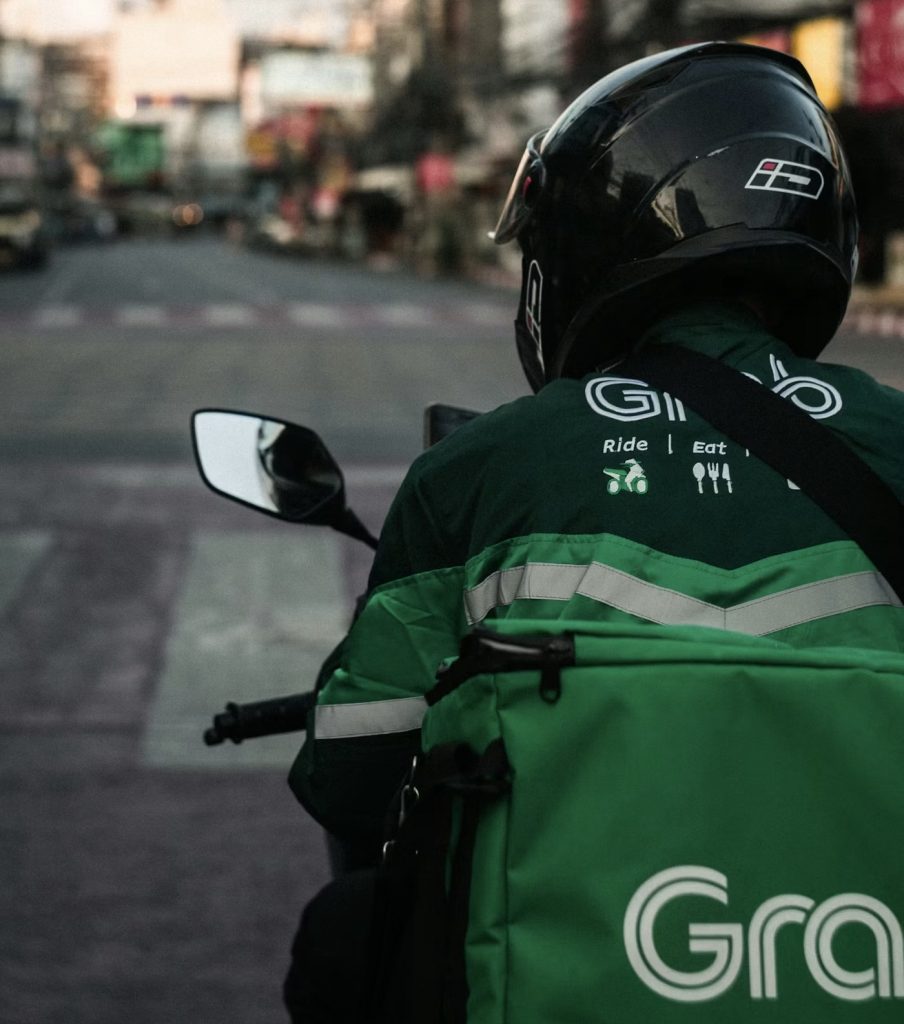
With the explosion of apps like Grab, ShopeeFood, and BaeMin, food delivery has become a way of life in Vietnam. While tipping is not mandatory, it is a significant part of the digital economy in 2026.
- Standard Tip: 10,000 to 20,000 VND (approx. $0.40–$0.80) is the “sweet spot” for most local and expat orders.
- Bad Weather / Peak Hours: If it is raining heavily or if you’ve ordered during the midday sun, increasing your tip to 30,000 to 50,000 VND is considered very generous and is deeply appreciated.
- Large Orders: For big group orders or high-value deliveries (over 500,000 VND), a tip of 50,000 VND is appropriate.
Services & Wellness
In the world of Vietnamese travel, few things are as rejuvenating as a spa day. Whether you are getting a foot rub in the Hoi An Ancient Town or a luxury four-hands massage in Da Nang, understanding the tipping etiquette ensures a smooth, stress-free experience.
How Much to Tip for Vietnamese Massages
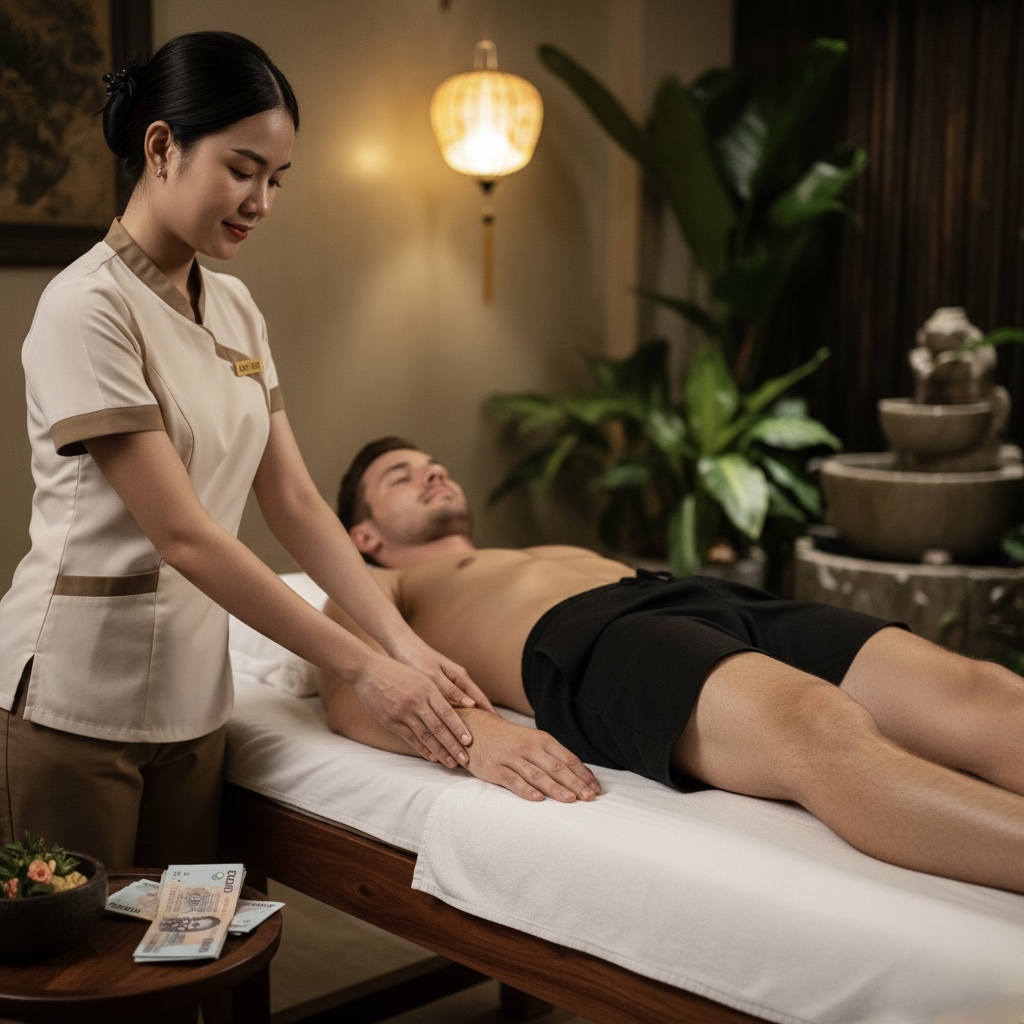
While tipping is optional in most of Vietnam, the massage and spa industry is the one notable exception where tipping is increasingly expected, especially in tourist hubs. In many local spas, the therapists rely heavily on gratuities as their primary source of income.
- Mid-Range & Local Spas: If the service was good, a tip of 50,000 to 100,000 VND ($2–$4 USD) per hour is considered standard and generous.
- Luxury Spas & Resorts: In high-end establishments, you should first check your bill for a 5–10% Service Charge.
• If included: No additional tip is necessary unless the service was life-changing.
• If not included: A tip of 10–15% of the total treatment cost is appropriate. - Specialized Treatments: For longer sessions (90–120 minutes) or intensive treatments like hot stone or four-hands massages, aim for the higher end of the scale (100,000 to 150,000 VND).
The “Direct Tip” Rule: The most important nuance for Vietnamese spas is who you give the money to.
How Much To Tip In Vietnam At Hair Salons
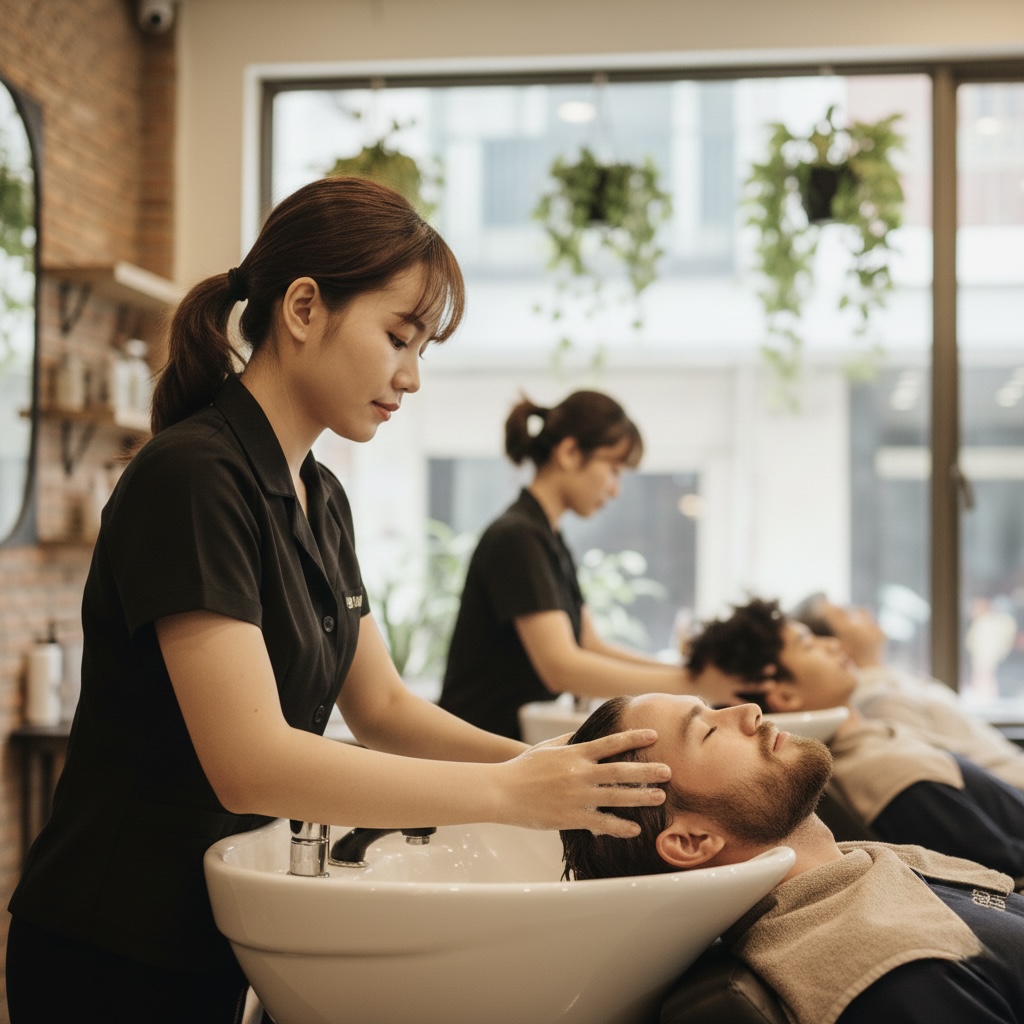
In Vietnam, a trip to the barber or salon often involves much more than just a trim—it frequently includes a hair wash, a face massage, and sometimes even an ear cleaning. While tipping isn’t a traditional requirement, it is a fantastic way to show appreciation for the extra time and care these professionals provide.
Haircuts & Barbershops
For a standard haircut at a local barbershop or a trendy salon in cities like Da Nang or Saigon, tipping is a gesture of kindness rather than an obligation.
- Local Barbershops: If you’re getting a quick cut at a neighborhood spot (which often costs between 60,000 and 100,000 VND), rounding up to the nearest 20,000 or 50,000 VND is perfect. For example, if the cut is 80,000 VND, handing over a 100,000 VND note and saying “keep the change” is very common.
- The “Combo” Service: Many Vietnamese barbershops offer a combo that includes a haircut, wash, and head massage. For these 45-60 minute sessions, a tip of 20,000 to 50,000 VND ($0.80–$2.00) is a generous way to thank your barber.
- High-End Salons: In upscale international salons where prices are higher, a tip of 10% of the total bill is appropriate if you are particularly happy with the result.
Hair Washes & Blowouts
The “shampoo and massage” (Gội đầu) is a beloved local ritual. If you visit a salon just for a wash and blowout:
- Suggested Tip: 20,000 VND is a standard “thank you” for the person who washed your hair, as they are often assistants rather than the main stylists.
Beauty & Nail Salons
Vietnam is famous for its affordable and high-quality nail art. Because this work is so meticulous, tipping is a standard practice for most travelers.
- Manicures & Pedicures: A tip of 30,000 to 50,000 VND per technician is a great rule of thumb.
- Complexity Matters: If you are getting intricate 3D nail art or a full set of extensions that takes over two hours, consider tipping 50,000 to 100,000 VND.
Pro Tip: In larger salons, you might have one person doing your nails and another doing a foot massage simultaneously. If you want to tip, it’s best to have small bills ready to hand to each person individually to ensure everyone is recognized for their work.
Final Thoughts on Tipping Etiquette in Vietnam
Navigating tipping in Vietnam doesn’t have to be a source of travel anxiety. While the country remains one of the most affordable and welcoming destinations in Southeast Asia, a small, well-placed gratuity is a powerful way to connect with the local community and show appreciation for the legendary hospitality you’ll encounter. By keeping a few small VND notes handy and remembering that a tip is a “heartfelt thank you” rather than a mandatory tax, you’ll be able to navigate everything from high-end Hanoi spas to roadside street food stalls with grace and confidence. Ultimately, the best tip you can give is a respectful “Cảm ơn” and a smile—gestures that are valued far more than the currency itself.
Is tipping mandatory in Vietnam?
No, tipping is never mandatory. It is always a voluntary gesture to show appreciation for good service. However, in tourist centers like Hanoi, Da Nang, and Ho Chi Minh City, it has become a common practice for travelers.
Should I tip in USD or Vietnamese Dong (VND)?
Always tip in Vietnamese Dong (VND). While some high-end hotels might accept USD, it is difficult for most service workers to exchange small amounts of foreign currency. Plus, tipping in the local currency ensures they get the full value without losing money on exchange rates.
What if the bill already includes a “Service Charge”?
Check your receipt for a 5% or 10% “SC” or “Service Charge.” If this is present, you do not need to leave an additional tip. This is common in upscale restaurants and luxury hotels.
Is it rude not to tip?
Not at all. If the service was poor or you are at a local street food stall, nobody will think twice if you don’t leave a tip. In Vietnam, a smile and a polite “Cảm ơn” (Thank you) are valued just as much as cash.